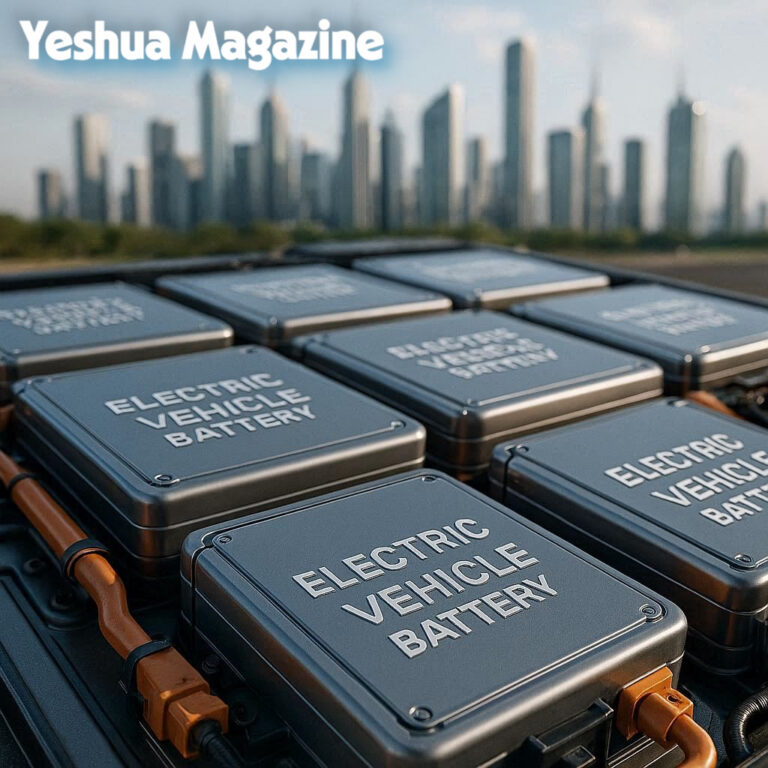
Introduction: The End of Range Anxiety Is Near
Range anxiety has long been the primary barrier preventing widespread electric vehicle adoption. The fear of running out of charge mid-journey, coupled with limited charging infrastructure, has kept many drivers anchored to traditional gasoline vehicles. However, we’re standing at the precipice of a revolution in electric vehicle battery technology that promises to make range anxiety obsolete.
Today’s premium electric vehicles typically offer 250-350 miles of range, but advancements in electric vehicle battery technology are pushing boundaries far beyond what seemed possible just five years ago. Major automakers and battery manufacturers are racing to commercialize innovations that will deliver 500-plus miles on a single charge, fundamentally transforming how we think about electric mobility.
Understanding Current Battery Limitations
Before exploring breakthrough technologies, it’s essential to understand why current lithium-ion batteries face range constraints.
The Energy Density Challenge
Modern electric vehicles rely primarily on lithium-ion batteries with nickel-manganese-cobalt (NMC) or lithium iron phosphate (LFP) chemistries. While these batteries have improved dramatically over the past decade, their energy density remains the limiting factor for vehicle range.
Energy density, measured in watt-hours per kilogram (Wh/kg), determines how much energy can be stored in a given weight. Current production batteries achieve approximately 250-300 Wh/kg at the cell level. To reach 500-mile range without making vehicles impractically heavy or expensive, this number needs to increase significantly.
The Weight-Range Paradox
Adding more conventional battery cells to extend range creates a vicious cycle. More batteries mean more weight, which requires more energy to move the vehicle, which demands even more batteries. This paradox explains why simply stacking more cells isn’t the solution to range anxiety.
Revolutionary Electric Vehicle Battery Technology Breaking the 500-Mile Barrier
Solid-State Batteries: The Game Changer
Solid-state batteries represent the most anticipated advancement in EV technology. Unlike conventional lithium-ion batteries that use liquid electrolytes, solid-state batteries employ solid electrolyte materials, typically ceramics or solid polymers.
Key Advantages:
Higher Energy Density: Solid-state batteries can achieve energy densities of 400-500 Wh/kg, nearly doubling current capabilities. This translates directly to extended range without proportional weight increases.
Enhanced Safety: Liquid electrolytes are flammable and can lead to thermal runaway in extreme conditions. Solid electrolytes are non-flammable, dramatically reducing fire risk and allowing for more aggressive charging protocols.
Faster Charging Potential: The solid electrolyte structure enables higher charge rates without dendrite formation, the crystalline structures that can short-circuit conventional batteries. This means potentially charging from 10% to 80% in under 10 minutes.
Longer Lifespan: Solid-state batteries demonstrate superior cycle life, with some prototypes maintaining over 90% capacity after 1,000+ charge cycles, compared to 80% for conventional batteries.
Current Development Status:
Toyota has announced plans to begin limited production of solid-state battery vehicles by 2027-2028, targeting 745 miles of range with 10-minute charging times. QuantumScape, backed by Volkswagen, has demonstrated solid-state cells that retain over 95% capacity after 1,000 cycles. BMW is partnering with Solid Power to integrate solid-state technology by the late 2020s.
Silicon Anode Technology: Maximizing Lithium-Ion Potential
While solid-state batteries grab headlines, silicon anode technology offers a nearer-term solution to boost range significantly.
The Science Behind Silicon Anodes:
Traditional lithium-ion batteries use graphite anodes, which can store one lithium ion per six carbon atoms. Silicon can theoretically store ten times more lithium ions in the same space, offering dramatic energy density improvements.
Pure silicon anodes face a critical challenge: silicon expands by up to 300% when absorbing lithium ions, causing structural degradation. Innovative solutions are overcoming this obstacle through nano-structured silicon particles, silicon-graphite composites, and protective coating technologies.
Real-World Implementation:
Tesla currently uses small amounts of silicon in their anodes, contributing to their industry-leading range figures. Amprius Technologies has developed silicon nanowire anodes achieving 500 Wh/kg at the cell level, potentially enabling 500-600 mile ranges in production vehicles within the next few years.
Sila Nanotechnologies has partnered with Mercedes-Benz to integrate silicon-dominant anodes, promising a 20-40% range increase over conventional batteries using the same pack size and weight.
Lithium-Metal Batteries: The Next Evolution
Lithium-metal batteries replace the graphite anode entirely with pure lithium metal, offering even higher theoretical energy densities than silicon approaches.
Performance Potential:
Energy densities can reach 350-400 Wh/kg with current lithium-metal technologies, with theoretical limits approaching 500 Wh/kg. This would enable 500-mile range in mid-size vehicles with battery packs weighing 30-40% less than today’s equivalents.
Technical Challenges:
The primary obstacle remains dendrite formation. When lithium metal is charged and discharged, it can form needle-like crystals that pierce the separator between electrodes, causing short circuits. Advanced separator materials, solid electrolytes, and protective coating technologies are addressing this issue.
QuantumScape’s solid-state approach essentially combines lithium-metal anodes with solid electrolytes, potentially offering the best of both worlds.
Battery Management Systems: Intelligence Behind the Range
Hardware improvements tell only half the story. Sophisticated battery management systems (BMS) are crucial for maximizing usable range and battery longevity.
Predictive Thermal Management
Modern BMS actively predicts and manages battery temperature to optimize performance and longevspan. By pre-conditioning batteries before charging or high-performance driving, these systems ensure cells operate within ideal temperature ranges, maximizing efficiency and enabling faster charging without degradation.
Cell-Level Monitoring and Balancing
Advanced BMS monitor individual cell voltages and temperatures, balancing charge distribution to prevent weak cells from limiting overall pack capacity. This granular control can recover 5-10% of usable range that older systems would leave untapped.
Machine Learning Optimization
Next-generation BMS employ machine learning algorithms that adapt to individual driving patterns, weather conditions, and terrain to optimize energy consumption. These systems learn when to pre-condition the cabin, how aggressively to regenerate energy during braking, and when to preserve battery capacity for upcoming hills or highway merges.
Charging Infrastructure: Making 500 Miles Practical
Extended range becomes truly meaningful only when coupled with comprehensive charging infrastructure.
Ultra-Fast Charging Networks
New charging standards are pushing power delivery beyond 350 kW, with experimental stations reaching 500 kW or higher. Combined with advanced battery technologies, this enables charging speeds approaching gas station fill-up times.
The Charging Interface Initiative (CharIN) is developing the Megawatt Charging System (MCS) standard, initially targeting commercial vehicles but with potential passenger car applications. These systems could deliver 200+ miles of range in just five minutes.
Bidirectional Charging and V2G
Vehicle-to-grid (V2G) technology transforms EVs from energy consumers into mobile energy storage units. With 500-mile range batteries, vehicles can support home power during outages or sell electricity back to the grid during peak demand periods, creating new economic models that offset ownership costs.
Wireless and Autonomous Charging
Companies like WiTricity are developing high-power wireless charging systems that could enable autonomous vehicles to charge themselves without human intervention. Combined with extended range, this creates a future where vehicles maintain optimal charge levels automatically.
The Environmental and Economic Impact
Reduced Battery Material Requirements
Higher energy density batteries require fewer raw materials per mile of range, potentially easing concerns about lithium, cobalt, and nickel availability. A 500-mile vehicle with next-gen batteries might use less total lithium than today’s 300-mile vehicles.
Manufacturing Advancements
Solid-state and advanced lithium-ion manufacturing processes are becoming more streamlined. Dry electrode coating techniques, pioneered by companies like Tesla (through their Maxwell acquisition), reduce manufacturing complexity and cost while improving performance.
Total Cost of Ownership
While next-generation batteries initially command premium prices, their longer lifespans and higher energy densities improve total cost of ownership. A battery that lasts 500,000 miles instead of 200,000 miles fundamentally changes the economics of electric vehicle ownership.
Real-World Applications: Vehicles Leading the Range Revolution
Mercedes-Benz VISION EQXX
Mercedes demonstrated that 500+ miles is achievable today with the VISION EQXX concept, which achieved over 620 miles on a single charge using advanced aerodynamics, lightweight materials, and cutting-edge battery technology.
Lucid Air
The Lucid Air already delivers up to 516 miles of EPA-rated range using optimized conventional lithium-ion technology, proving that 500 miles isn’t just theoretical but commercially available today.
Upcoming Solid-State Vehicles
Multiple manufacturers have announced solid-state battery vehicles targeting 2027-2030 release dates with 500-700 mile ranges, including Toyota, Nissan, and several Chinese manufacturers.
Overcoming Remaining Challenges
Manufacturing Scale-Up
Moving from laboratory prototypes to mass production remains the greatest challenge. Solid-state batteries require entirely new manufacturing processes, equipment, and quality control systems. Building gigafactories capable of producing millions of cells annually will take significant time and investment.
Cost Reduction
Next-generation batteries currently cost significantly more than conventional lithium-ion cells. Achieving price parity requires economies of scale, manufacturing optimization, and continued materials science innovation. Industry experts predict cost competitiveness by the early 2030s.
Standardization
As battery technologies proliferate, standardization becomes crucial for recycling, second-life applications, and supply chain efficiency. Industry collaboration will be essential to avoid a fragmented ecosystem that slows adoption.
Conclusion: The Road Ahead
The question is no longer whether electric vehicles can achieve 500-mile range, but when this capability becomes standard across all vehicle segments. Next-generation battery technologies—particularly solid-state batteries, silicon anodes, and lithium-metal approaches—are converging to eliminate range anxiety permanently.
Within the next five to seven years, 500-mile electric vehicles will transition from premium luxury products to mainstream offerings. Combined with expanding fast-charging networks and intelligent battery management systems, this range capability will remove the final psychological barrier to electric vehicle adoption.
The automotive industry stands at an inflection point. The internal combustion engine dominated transportation for over a century, but its reign is ending. Next-generation batteries aren’t just incremental improvements—they represent a fundamental transformation that will make electric vehicles not just competitive with gasoline vehicles, but superior in every meaningful metric.
Range anxiety will soon be remembered as a temporary obstacle in the transition to sustainable transportation, overcome by human ingenuity, materials science innovation, and the relentless march of battery technology progress.