DISCLAIMER: This article serves educational and informational purposes only. All information comes from publicly available defense reports, news agencies, and military analysis websites. This article does not promote, support, or encourage any military conflict, violence, or war. The content helps readers understand publicly known military capabilities from an academic and analytical perspective only.
Explore Iran’s military technology, fighter jets, soldier strength, naval power, and whether Iran can handle the American B2 stealth bomber. A complete educational defense analysis.
Iran Military Technology: Fighter Jets, Soldiers, Naval Power and the B2 Bomber Challenge
How powerful is Iran’s military today? What fighter jets does Iran fly? How many soldiers does Iran command? Can Iran handle or shoot down the legendary American B2 stealth bomber? Defense analysts, researchers, and curious readers ask these questions constantly. Therefore, this article answers all of them clearly, factually, and in full detail. All information here comes from publicly available defense reports and trusted military analysis sources.
Overview of Iran’s Military Structure
First of all, Iran does not run a single unified military force. Instead, Iran operates two separate and parallel military structures side by side. Understanding this structure is essential before analyzing Iran’s overall military capability.
Iran Runs Two Separate Military Forces
Iran’s regular army carries the name Artesh. The Islamic Revolutionary Guard Corps, commonly known as the IRGC, runs alongside it independently. Both forces operate separately from each other. However, both ultimately answer to Iran’s Supreme Leader directly.
Why the IRGC Holds More Power
Furthermore, the IRGC holds far more political power than the regular army. In addition, the IRGC directly controls Iran’s missile program, drone forces, and regional proxy networks across the Middle East. Together, these two forces make Iran one of the strongest military powers in the entire Middle East region.
How Many Soldiers Does Iran Have?
Iran fields an impressively large military in terms of raw manpower. According to major international defense institutes, Iran commands around 610,000 active duty personnel at any given time.
Breaking Down Iran’s Active Personnel
This total includes roughly 350,000 troops in the regular army and about 190,000 members of the IRGC. Furthermore, the breakdown also covers nearly 18,000 personnel in the navy, 37,000 in the air force, and around 15,000 dedicated air defense personnel spread across the country.
Iran’s Reserve Forces
Moreover, Iran also commands approximately 350,000 reserve and trained personnel that the country can mobilize quickly when needed. As a result, Iran’s total military manpower reaches close to one million people when reserves are included. Therefore, Iran consistently ranks among the top military powers in the world in terms of total personnel strength.
Iran’s Global Military Ranking
Major global military ranking indexes consistently place Iran among the top 20 strongest militaries in the world out of nearly 150 countries analyzed. This places Iran well ahead of most regional neighbors and many European nations in terms of raw military capability overall.
Iran’s Ground Forces and Land Technology
Iran’s ground forces are structured to cover vast territory while maintaining significant firepower across multiple combat domains. The army operates more than 1,500 main battle tanks, over 2,100 armored fighting vehicles, more than 4,500 artillery pieces, and upwards of 1,000 multiple launch rocket systems deployed throughout the country.
Together, these assets provide layered conventional strength designed to support both defensive operations and regional force projection.
What Tanks Does Iran Currently Operate?
Iran operates a diverse mix of tank designs on the battlefield. The Zulfiqar main battle tank represents Iran’s primary indigenous armored vehicle. Iran also runs older T-72 Soviet era tanks alongside some pre-revolution American armor. However, defense analysts widely consider most of this hardware outdated compared to modern NATO or Israeli armored vehicles currently in service.
Iran’s Domestic Arms Manufacturing Industry
Importantly, Iran has built a robust domestic arms manufacturing program over many decades of development. Iran’s defense industry now produces a wide range of weapons completely independently. Furthermore, Iran has even become an arms exporter to other nations and non-state actors across the region. Therefore, international sanctions have slowed but certainly not stopped Iran’s weapons development program entirely.
Iran’s Artillery and Rocket Forces
In addition to tanks, Iran operates one of the largest artillery forces in the Middle East. Iran fields both towed artillery guns and self-propelled systems across its ground forces. Furthermore, Iran’s extensive multiple launch rocket system inventory gives its ground forces significant long-range firepower against enemy positions and infrastructure targets.
Iran’s Fighter Jets: What Aircraft Does Iran Fly?
Iran’s air force carries one of the most unique and complicated histories in global military aviation. Before the Islamic Revolution, Iran received large quantities of advanced American military aircraft under the Shah’s government. After the revolution, all military ties with America ended abruptly and permanently. As a result, Iran kept a fleet of American jets it could no longer officially maintain or upgrade through normal supply channels.
Iran’s Pre-Revolution American Aircraft
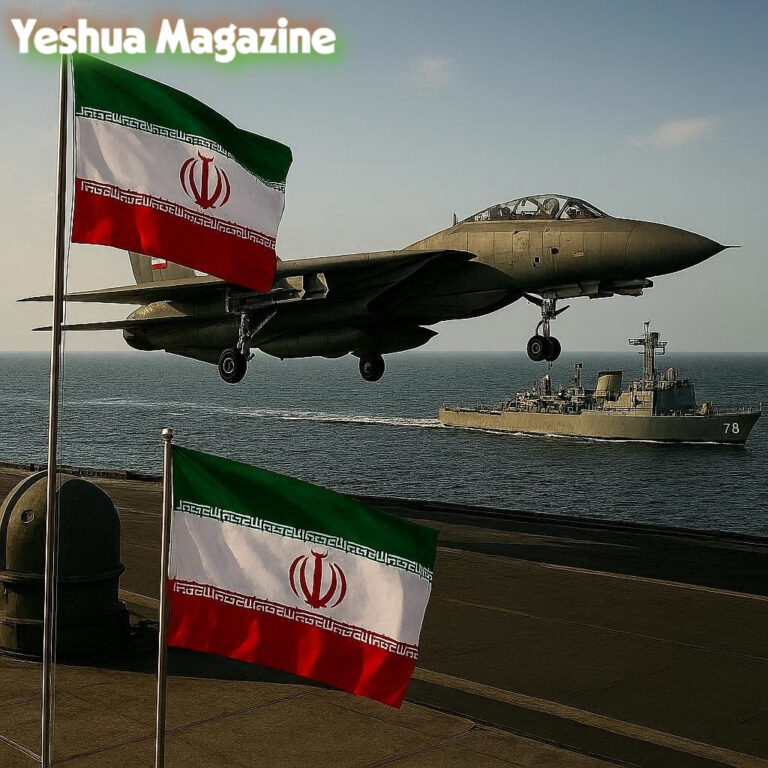
Iran’s air force inventory reflects a very complex procurement history. This history ranges from pre-revolution American sales to post-revolution imports from China and Russia, and finally to domestically manufactured platforms built entirely under heavy sanction pressure. Specifically, Iran currently flies the F-4 Phantom II, the F-14A Tomcat, and the F-5E Tiger II from its pre-revolution American era.
Iran’s Russian Aircraft Fleet
Iran also operates Russian MiG-29 Fulcrum fighters and Su-24 Fencer strike aircraft acquired during the post-revolution period. Together, these aging aircraft form the core of Iran’s conventional air power alongside its domestic designs. Both the MiG-29 and Su-24 give Iran a modest modern combat capability even though both designs are now several decades old.
Iran’s Domestic Fighter Jet Programs
Iran has also designed and built its own fighter jets domestically over many years. The HESA Kowsar, HESA Saeqeh, and HESA Azarakhsh all represent Iran’s domestic aviation manufacturing programs. However, defense analysts generally consider these jets to be heavily modified or reverse-engineered versions of the older American Northrop F-5 Tiger design. Therefore, they do not match modern fourth or fifth-generation fighters in performance or capability.
How Iran Upgraded Its Domestic Jets
That said, Iran has upgraded these old airframes significantly over the years of operation. The Kowsar features new avionics combined with an advanced fire control system, a digital data network, a glass cockpit, a heads-up display, ballistic computers, and smart mobile mapping systems. These upgrades give older airframes some modern combat relevance despite their considerable age.
Iran Acquires Russian Su-35 Fighter Jets
Crucially, Iran has recently taken a major step forward in upgrading its air force capability. Iran received its first Russian-built Sukhoi Su-35SE fighter jets as part of a defense agreement with Russia. Iran transported these jets disassembled on large cargo aircraft to Tehran before moving them to air force bases for final assembly and operational testing.
What the Su-35 Brings to Iran’s Air Force
Furthermore, Russia is currently producing additional Su-35 fighter jets for Iran under this ongoing agreement. These deliveries mark a significant modernization milestone for Iran’s air force. The Su-35SE is a powerful multirole fighter jet equipped with an Active Electronically Scanned Array radar system. It reaches a maximum speed of Mach 2.25 and covers an operational range of 3,600 kilometers without refueling. This capability represents a massive and transformative leap forward compared to Iran’s current aging fleet of pre-revolution aircraft.
Technology Systems Inside Iranian Jets
Iran has worked consistently hard to fit its aging fleet with modern weapons and electronic systems. Iranian engineers developed the Fakour-90, a long-range air-to-air missile specifically designed to fit the F-14 Tomcat airframe. Furthermore, Iranian technicians reportedly made close to 300 separate modifications to the Tomcat over the years to improve its performance and extend its operational life significantly.
How Iran Overcomes Spare Parts Shortages
Recent advances in domestic manufacturing technologies have also allowed Iran to produce complex spare parts that sanctions previously made impossible to source externally. Additionally, Iran has largely replaced the wiring, sensors, and avionics systems across much of its older fleet with domestically developed and tested alternatives. This approach keeps aging airframes operational far longer than international sanctions intended.
Iran’s Drone Technology: A True Game Changer
Iran’s drone program now stands as one of the most advanced and combat-proven in the developing world. Iran leads the developing world in operational drone warfare, flying the Shahed-129, Mohajer-6, Ababil-3, and Karrar drones in multiple active conflict zones across the Middle East region.
How the Shahed-136 Loitering Munition Works
The Shahed-136 has earned global recognition as a highly effective and very low-cost weapon system. Iran designed it as a one-way attack drone with GPS-guided precision strike capability. It flies at low altitude and strikes enemy targets with high accuracy. Furthermore, Iran exports this drone widely, and operators have deployed thousands of these drones against hardened infrastructure targets with very significant and well-documented results.
Iran’s Advanced Underwater Drone Technology
Iran has also developed a revolutionary new drone capability that combines naval and aerial warfare in an entirely new way. Iran unveiled the Hadid-110, a jet-powered suicide drone that operators can launch directly from an underwater submarine drone platform before it strikes its pre-designated surface target. This represents a genuinely new and dangerous capability in asymmetric naval warfare that no other developing nation currently matches in operational deployment.
Iran’s Revolutionary Drone Carrier Ship
Furthermore, Iran converted a large merchant ship into a fully functional drone carrier vessel. This ship operates an extensive runway, multiple hangars on two separate decks, and full support facilities for drones, helicopters, and accompanying naval vessels. This development gives Iran the unprecedented ability to project drone power far beyond its immediate coastline for the very first time in its military history.
Iran’s Missile Arsenal: The Real Backbone of Iran’s Power
Iran’s greatest military strength clearly lies in its missiles rather than its fighter jets or ground forces. Iran holds the largest and most diverse missile arsenal across the entire Middle East region. Missiles and unmanned systems together form the absolute backbone of Iran’s overall defense and offensive doctrine.
Iran’s Long-Range Ballistic Missiles
Iran’s missile forces include the Shahab-3, Emad, Sejjil, and Khaybar Shekan ballistic missiles. These weapons carry ranges of up to 2,000 kilometers, covering much of the Middle East and parts of Southern Europe. Among the most prominent missiles in Iran’s entire arsenal sits the Khorramshahr-4. This weapon carries a range of 2,000 kilometers and delivers a warhead weighing 1,500 kilograms to its target with considerable accuracy.
Iran’s Tactical Battlefield Missiles
Iran also operates the Fateh-110, Zolfaghar, Dezful, and Raad tactical missiles for battlefield use against closer and more immediate targets. These shorter-range systems give Iran’s ground commanders significant precision strike capability against enemy bases, ports, airfields, and military concentrations anywhere within the broader region.
Iran’s Hypersonic Missile Claim
Additionally, Iran claims to have developed the Fattah hypersonic missile. Iran describes this weapon as a hypersonic glide vehicle capable of evading modern air defense systems through extreme speed combined with unpredictable maneuvering during its terminal flight phase. Independent verification of its full operational capabilities remains limited at this time.
Iran’s Underground Missile Cities
Iran also hides much of its missile power deep underground in an extensive network of hardened and buried facilities. Iran calls these facilities missile cities. Engineers buried them deep enough to survive even heavy conventional airstrikes from modern aircraft. These underground bases allow Iran to launch missiles even after sustaining serious attacks on its above-ground infrastructure. This survivability factor makes Iran’s missile threat extremely difficult to neutralize completely through airstrikes alone.
Iran’s Naval Power and Ship Technology
Iran’s navy focuses specifically on asymmetric warfare in the Persian Gulf and the strategically vital Strait of Hormuz chokepoint. Rather than building large conventional warships, Iran operates over 100 small fast-attack craft. Iran arms these vessels with anti-ship missiles and rockets designed to swarm and overwhelm larger enemy ships in the confined shallow waters of the Persian Gulf.
Iran’s Submarine Fleet and Capabilities
Iran also operates several classes of domestically built submarines actively. The Ghadir, Fateh, and Tareq class submarines all serve in Iran’s underwater fleet. Iran equips these vessels with torpedoes and anti-ship missiles for coastal defense operations. Shallow coastal waters suit these submarines best, and Iran designed them specifically for defensive operations along its long coastline rather than deep ocean warfare missions.
Iran’s Anti-Ship Missile Systems
Iran’s naval technology also prominently features the Noor and Qader anti-ship missiles as key weapons. These weapons threaten large surface vessels including modern warships operating anywhere in the region. Iran deploys these missiles from land batteries, surface vessels, and aircraft simultaneously. This multi-layered anti-ship capability creates a serious and overlapping threat zone across the entire Persian Gulf region that enemy naval commanders must carefully plan around.
Iran’s Air Defense Systems
Iran operates a layered and overlapping air defense network across its entire territory. This network combines Russian-supplied systems with domestically developed platforms to create multiple overlapping layers of protection against air attack from any direction.
Russia’s S-300 System Protecting Iran
Iran operates the Russian-supplied S-300PMU2 long-range air defense system as a key component of its defensive network. Russia originally resisted selling this system to Iran for many years before finally completing the delivery. The S-300 provides Iran with a genuine long-range engagement capability against conventional aircraft and certain classes of cruise missiles approaching from any direction.
Iran’s Domestically Developed Bavar-373
Iran also developed the Bavar-373 as its own domestically engineered answer to the Russian S-300 system. Iranian engineers designed it to detect and simultaneously engage aircraft, cruise missiles, and ballistic missiles approaching from multiple directions. Iran claims performance broadly comparable to the S-300 system, though independent analysts note that real-world combat performance has not always matched Iran’s official public claims for this system.
Iran’s Khordad-15 Medium Range System
The Khordad-15 represents Iran’s medium-range air defense answer for shorter engagement distances. Iran specifically designed this system to engage stealth aircraft at shorter ranges where stealth coatings provide less protection. Iranian state media famously claimed that the Khordad-15 successfully engaged and shot down an American RQ-4 Global Hawk surveillance drone, making this system globally significant and widely discussed in defense circles worldwide.
Can Iran Handle or Take Down the American B2 Stealth Bomber?
This question sits at the absolute heart of this entire analysis. The short and direct answer, based on all available evidence, is no. Iran currently does not hold a reliable and proven capability to consistently detect, track, and destroy a B2 Spirit stealth bomber under real full-spectrum combat conditions. Here is the complete and detailed explanation.
What Makes the B2 So Incredibly Difficult to Defeat?
The B2 Spirit does not operate like any regular bomber in existence today. American engineers designed it with a distinctive flying wing shape and coated its entire outer surface with advanced radar-absorbent materials. As a result, the B2 produces an extremely tiny radar cross-section roughly equivalent to a small bird on enemy radar screens. Most radar systems simply cannot detect it at operationally useful engagement distances.
How America Protects the B2 in Combat
Furthermore, the B2 never flies into combat alone under any circumstances. The US Air Force always surrounds it with a complete and layered support package. Electronic warfare aircraft jam and blind enemy radar systems simultaneously from standoff distances. Cyber operations attack enemy command and control networks before the mission even begins. Decoy drones create dozens of false radar tracks to confuse and overwhelm air defense operators on the ground. Stand-off cruise missiles destroy key air defense radar and missile nodes before the bomber even enters the threat envelope of enemy systems.
Iran’s Detection Problem Against the B2
Against conventional aircraft, Iran’s best radar systems detect targets at ranges beyond 100 kilometers with reasonable confidence. However, against the B2’s radar-absorbent surface and flying wing design, that detection range collapses dramatically. By the time an Iranian radar operator potentially detects the B2, the bomber has already released its weapons and begun its return journey home. This fundamental detection problem makes the entire intercept chain impossible to complete in time.
Could Iran Ever Shoot Down a B2 Bomber?
In pure theory, a small possibility always exists under very specific circumstances. In a historical example, Serbian forces shot down an American F-117 Nighthawk stealth aircraft using clever older radar techniques and patient long-term observation. However, the B2 represents a far more advanced and refined stealth design than the F-117 ever was. The technology gap between the two aircraft is enormous and well-documented.
The Full Combat Reality Iran Faces
Against the full American strike package combining simultaneous electronic warfare, cyber attacks, decoy drones, and multiple stealth bombers operating together as a coordinated system, Iran’s current air defense network faces an extraordinarily difficult and multi-layered challenge. No nation in the world has yet successfully intercepted a B2 Spirit bomber under real operational combat conditions.
Iran’s Future Military Modernization Plans
Iran is actively working to close the technology gap through multiple ambitious modernization programs running simultaneously across all military branches.
Russia Delivers Advanced Su-35 Fighter Jets
Under an active defense agreement with Russia, Iran has ordered a significant number of Su-35SE fighter jets. The initial objective was to replace its aging F-14 Tomcat fleet, which has been in service for decades. Later, the scope of the order was expanded to include replacements for the older F-4 Phantom aircraft as well.
Plans indicate that these advanced fighters will be deployed across multiple air force bases, strengthening both northern and central air defense coverage at the same time.
China Supplies Advanced Weapons to Iran
China is also actively strengthening Iran’s military capabilities across multiple domains at the same time. Iran is negotiating with China for the acquisition of advanced J-10C fighter jets. Defense analysts consider the J-10C a genuine 4.5-generation aircraft equipped with Active Electronically Scanned Array radars and long-range air-to-air missiles. This acquisition would significantly challenge regional air superiority if Iran completes the deal successfully.
Chinese Air Defense Systems Now in Iran
Furthermore, China has already delivered advanced HQ-16 and HQ-17AE anti-aircraft missile systems directly to Iran. These deliveries indicate a broader and deepening strategic push toward building a stronger and more integrated air defense network covering Iran’s entire territory from multiple threat directions simultaneously.
Iran Aggressively Rebuilds Its Missile Arsenal
Iran is also rapidly restocking and expanding its missile inventory following extensive recent operational use across the region. Iran’s domestic defense industry continues developing entirely new generations of ballistic and cruise missiles with longer range, greater precision, and significantly improved survivability features compared to earlier designs. This ongoing and aggressive missile development program ensures that Iran’s most powerful military asset continues growing stronger regardless of any limitations in its conventional air force capability.
Key Takeaways
Iran Military Manpower — Iran commands approximately 610,000 active personnel plus 350,000 reserves, totaling close to one million military personnel overall across all branches.
Iran Fighter Jets — Iran currently flies aging F-4, F-14, F-5, and MiG-29 jets alongside domestic Kowsar designs. Russia is actively delivering advanced Su-35SE fighters to modernize the fleet significantly.
Iran’s Missiles and Drones — At the core of Iran’s military strength lies its extensive missile arsenal and the Shahed family of drones. Together, these systems provide Tehran with significant strike capability and allow it to project power well beyond its borders. This combination has become a key pillar of its regional strategy.
Iran’s Naval Power — In the Persian Gulf, asymmetric warfare shapes much of Iran’s maritime doctrine. The country operates more than 100 fast-attack craft, several classes of submarines, and even a converted drone carrier vessel. Designed for speed, flexibility, and disruption, these assets focus on countering larger conventional naval forces.
Iran vs. B-2 Bomber — When it comes to advanced stealth aircraft, significant limitations remain. Detecting, tracking, and successfully engaging a B-2 stealth bomber—especially one operating with full U.S. support systems—would be extremely challenging under real combat conditions. At present, no publicly verified evidence suggests Iran possesses a fully reliable capability to neutralize such an asset.
Conclusion
Iran’s military is large, creative, and genuinely powerful within its regional operating environment. Its missile and drone programs consistently impress defense analysts around the entire world. Iran fields a serious and multi-layered asymmetric threat against any opponent choosing to operate in the Middle East region. However, Iran’s conventional air force carries significant age and serious technological limitations compared to the most modern air forces currently operating globally.
Its air defense network faces real and well-documented challenges against modern stealth aircraft combined with full-spectrum electronic warfare and coordinated cyber operations. Against the American B2 Spirit stealth bomber operating with its complete layered support package, Iran’s current capabilities simply do not provide a reliable and consistent interception guarantee under combat conditions.
Iran is now modernizing rapidly and seriously through Russian Su-35 jet deliveries, Chinese weapons system acquisitions across multiple domains, and very aggressive domestic missile development programs. However, closing the deep and fundamental technological gap against the world’s most advanced stealth bomber remains an enormous and genuinely long-term challenge for Iran’s military planners and engineers for many years ahead.
Found this analysis helpful? Drop a comment below and share your thoughts with other readers!