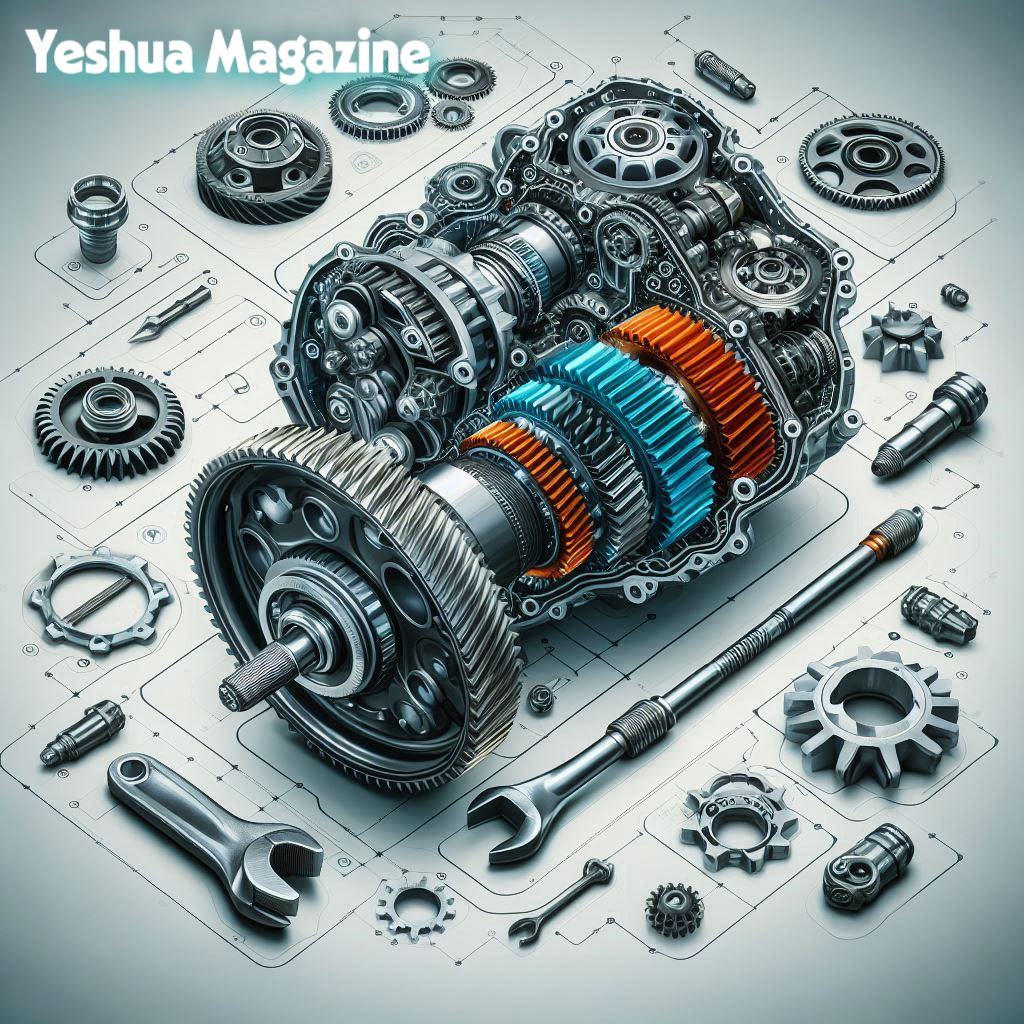


Every time you drive a car, whether you’re manually shifting through gears or letting an automatic transmission do the work, you’re utilizing one of the most ingenious mechanical systems ever developed. Understanding how car gears work not only makes you a more informed driver but can also help you maintain your vehicle better and troubleshoot potential issues. This comprehensive guide explores the fascinating world of automotive transmissions and gear systems.
What Are Car Gears and Why Do We Need Them?
Car gears are mechanical components that work together to transfer power from your engine to your wheels while allowing you to control speed and torque. The fundamental reason vehicles need gears is that internal combustion engines operate efficiently only within a specific range of rotations per minute (RPM). Without gears, your car would struggle to start from a standstill and couldn’t reach high speeds efficiently.
Think of gears like the different settings on a bicycle. When climbing a steep hill, you shift to a lower gear to make pedaling easier, even though you move slower. On flat ground, you shift to a higher gear to move faster with the same pedaling effort. Car gears work on the same principle, optimizing the relationship between engine power and wheel speed for different driving conditions.
The Basic Principles of Gear Operation
At their core, gears are toothed wheels that mesh together to transmit rotational motion and force. When one gear turns, its teeth push against the teeth of another gear, causing it to rotate. The magic happens in the relationship between gear sizes.
When a small gear drives a larger gear, the larger gear turns more slowly but with greater force, or torque. This is called a gear reduction and is what lower gears in your car accomplish. Conversely, when a larger gear drives a smaller one, the smaller gear spins faster but with less torque, which is what happens in higher gears.
The gear ratio is the relationship between the number of teeth on two meshing gears. For example, if the driving gear has 10 teeth and the driven gear has 30 teeth, the gear ratio is 3:1. This means the driving gear must rotate three times for the driven gear to complete one rotation, but the driven gear receives three times the torque.
How Manual Transmission Gears Work
Manual transmissions give drivers direct control over gear selection through a clutch pedal and gear shifter. The system consists of several key components working in harmony.
The clutch is a mechanical device that connects and disconnects the engine from the transmission. When you press the clutch pedal, you’re physically separating two plates, allowing the engine to spin independently from the transmission. This disconnection is necessary to change gears without grinding or damaging the transmission.
Inside the transmission housing, you’ll find multiple gear sets mounted on parallel shafts. The input shaft connects to the engine through the clutch, while the output shaft connects to the drive wheels. Between them lies the layshaft, which carries several gears of different sizes.
When you move the gear shifter, you’re engaging a mechanism called a selector fork, which slides a collar along the output shaft to lock onto a specific gear. Each gear position connects different gear combinations, creating the various ratios needed for different speeds and loads.
First gear uses the largest gear ratio, providing maximum torque for starting from rest and climbing steep inclines. As you accelerate and shift through second, third, fourth, and potentially fifth or sixth gears, each successive gear reduces the ratio, allowing the wheels to spin faster relative to engine speed. This progression enables smooth acceleration from zero to highway speeds while keeping the engine within its optimal RPM range.
How Automatic Transmission Gears Work
Automatic transmissions accomplish the same goal as manual transmissions but use a completely different mechanism that eliminates the need for a clutch pedal and manual gear selection. The heart of most automatic transmissions is the torque converter.
A torque converter is a fluid coupling device that uses transmission fluid to transfer power from the engine to the transmission. It contains three main components: the pump (connected to the engine), the turbine (connected to the transmission), and the stator (which redirects fluid flow). When the engine runs, the pump spins and throws transmission fluid outward. This fluid hits the turbine blades, causing them to spin and drive the transmission. The beauty of this system is that it allows the engine to keep running even when the vehicle is stopped.
Inside an automatic transmission, planetary gear sets replace the sliding gears of a manual transmission. A planetary gear set consists of a central sun gear, several planet gears that orbit around it, and an outer ring gear. By holding different components stationary or allowing them to rotate using clutches and bands, the transmission can create different gear ratios without moving gears along shafts.
Modern automatic transmissions use hydraulic pressure, controlled by a complex valve body and increasingly sophisticated computer systems, to determine when to shift gears. These computers monitor factors like vehicle speed, engine RPM, throttle position, and even road grade to select the optimal gear for any situation.
Understanding Gear Ratios and Their Impact
Gear ratios fundamentally determine how your car performs in different situations. Lower numerical ratios (like 4:1) are called “tall” or “high” gears and are used for highway cruising. They allow the wheels to turn many times for each engine revolution, reducing engine RPM and improving fuel economy at sustained speeds.
Higher numerical ratios (like 3:1 or lower) are “short” or “low” gears that multiply engine torque for acceleration and hill climbing. They make the engine work harder, spinning at higher RPM for a given vehicle speed, but provide the force needed to overcome inertia and gravity.
The final drive ratio, located in the differential, works in conjunction with transmission gears to determine overall gearing. This ratio affects all gears equally and represents a compromise between acceleration and top speed.
Special Gear Configurations
Beyond standard forward gears, transmissions include several special configurations. Reverse gear uses an additional idler gear that reverses the direction of rotation, sending power backward to the wheels. This extra gear in the power flow is why reverse gear often has a lower ratio than first gear and produces a distinctive whining sound.
Neutral disengages all gears, allowing the engine to run without transmitting power to the wheels. In manual transmissions, this happens when no gear collar is engaged. In automatics, all clutch packs release, leaving the planetary gears free to spin without driving the output shaft.
Park, found only in automatic transmissions, uses a pawl that locks into a notched wheel on the output shaft, physically preventing the transmission and wheels from rotating. This provides a parking brake function independent of the vehicle’s friction brakes.
The Evolution: CVT and Dual-Clutch Transmissions
Modern engineering has produced alternatives to traditional gear systems. Continuously Variable Transmissions (CVTs) eliminate fixed gears entirely, using a belt or chain running between two variable-diameter pulleys. By continuously adjusting pulley diameters, CVTs provide an infinite number of ratios within their operating range, keeping engines at optimal RPM for either performance or efficiency.
Dual-clutch transmissions combine manual transmission efficiency with automatic convenience by using two separate clutches for odd and even gears. While one gear is engaged, the next gear is pre-selected on the other clutch, allowing lightning-fast shifts with no interruption in power delivery.
Conclusion
Car gears represent a brilliant solution to the challenge of matching engine characteristics to real-world driving demands. Whether through the direct mechanical connection of a manual transmission, the fluid coupling of a traditional automatic, or the innovative approaches of CVTs and dual-clutch systems, gears multiply torque when needed and allow efficient cruising when possible. Understanding how these systems work helps you appreciate the engineering marvel under your hood and makes you a more informed, capable driver. The next time you accelerate onto a highway or climb a steep hill, you’ll know exactly what’s happening inside your transmission to make it possible.