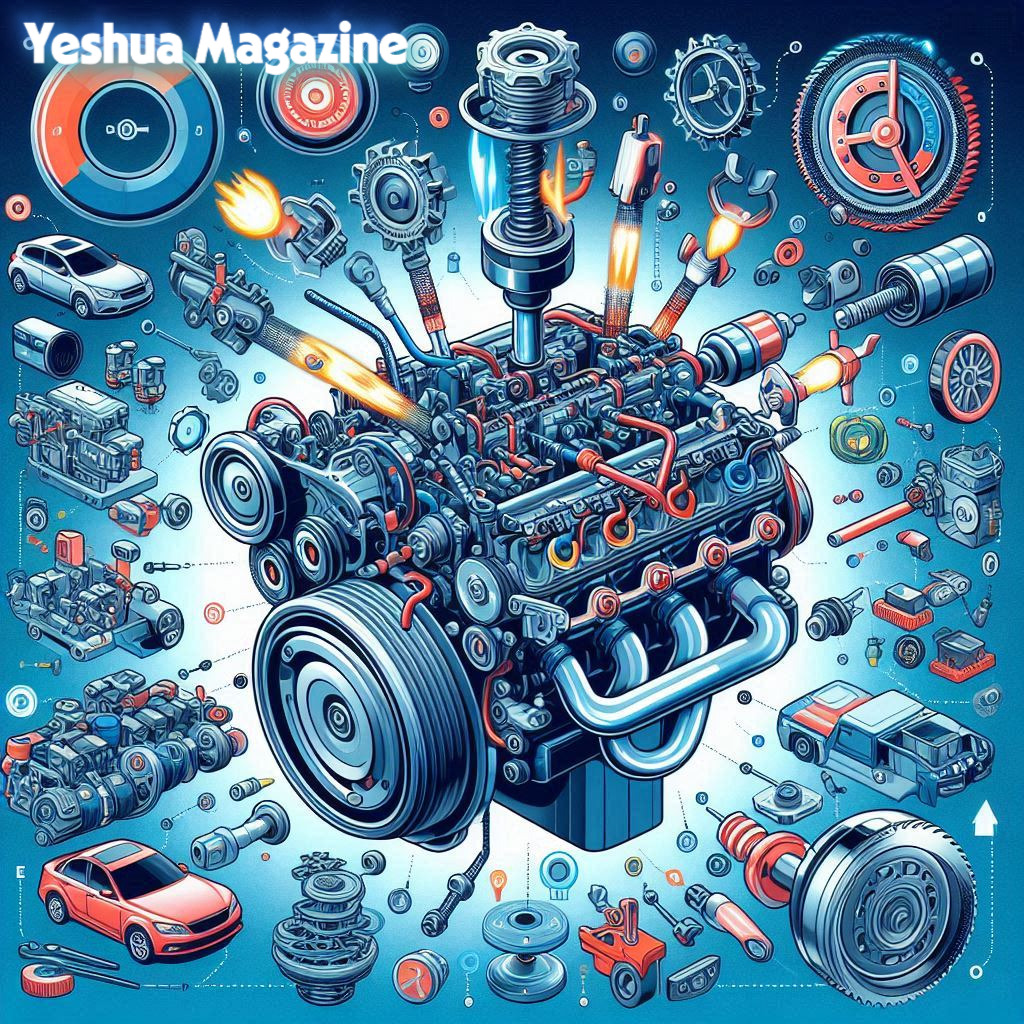


Understanding the Heart of Your Vehicle: Petrol and Diesel Engine Technology
When you turn the key in your car’s ignition, a sophisticated symphony of mechanical and chemical processes begins. Whether your vehicle runs on petrol or diesel, the fundamental principle remains the same: converting liquid fuel into mechanical energy that propels your car forward. However, the methods these two fuel types use to achieve this goal differ significantly, each with unique advantages and operational characteristics.
The Fundamental Principle: Internal Combustion
Both petrol and diesel engines belong to the family of internal combustion engines, meaning they burn fuel inside sealed cylinders to create power. This contrasts with external combustion engines like steam engines, where fuel burns outside the working chamber. The energy released from burning fuel creates expanding gases that push pistons, which ultimately rotate the crankshaft and drive your wheels.
Understanding how these engines work requires examining the complete fuel journey, from the tank to the exhaust pipe, and recognizing the critical differences between petrol and diesel combustion methods.
How Petrol Engines Work: The Spark Ignition System
The Four-Stroke Cycle Explained
Petrol engines operate on what engineers call the Otto cycle, named after Nikolaus Otto who invented it in 1876. This process repeats thousands of times per minute and consists of four distinct strokes:
Intake Stroke: The piston moves downward inside the cylinder, creating a vacuum. The intake valve opens, allowing a carefully measured mixture of petrol vapor and air to rush into the combustion chamber. Modern engines use fuel injectors that spray a fine mist of petrol, which mixes with incoming air to create an optimal fuel-air ratio of approximately 14.7 parts air to 1 part fuel by weight.
Compression Stroke: Both valves close, sealing the cylinder. The piston moves upward, compressing the fuel-air mixture to roughly one-tenth of its original volume. This compression typically reaches pressures of 8 to 12 atmospheres in standard petrol engines. The compression heats the mixture but not enough to cause spontaneous ignition.
Power Stroke: When the piston reaches the top of its travel (top dead center), the spark plug fires, creating an electrical spark that ignites the compressed fuel-air mixture. The fuel burns rapidly, releasing tremendous energy that creates expanding gases reaching temperatures of 2,500 degrees Celsius. These gases forcefully push the piston downward, creating the power that drives the crankshaft.
Exhaust Stroke: The exhaust valve opens, and the piston moves upward again, pushing the burnt gases out of the cylinder and into the exhaust system. The cycle then repeats, with intake beginning again as the piston descends.
Key Components of Petrol Engine Systems
The fuel injection system has evolved dramatically over decades. Modern petrol engines use electronic fuel injection (EFI) systems that precisely control fuel delivery based on dozens of sensor inputs. The engine control unit (ECU) monitors factors like throttle position, engine temperature, air pressure, and oxygen levels in the exhaust to optimize fuel delivery for maximum efficiency and minimum emissions.
The ignition system coordinates precisely timed sparks across all cylinders. Each spark plug must fire at exactly the right moment, typically just before the piston reaches top dead center on the compression stroke. Advanced engines use individual ignition coils for each cylinder, allowing independent timing control.
How Diesel Engines Work: The Compression Ignition System
The Diesel Cycle: Power Through Pressure
Diesel engines, invented by Rudolf Diesel in 1892, operate on a fundamentally different principle called compression ignition. Unlike petrol engines that require spark plugs, diesel engines ignite fuel purely through extreme compression and heat.
Intake Stroke: The piston descends, and the intake valve opens. However, unlike petrol engines, only pure air enters the cylinder—no fuel yet. This air intake is unrestricted, meaning diesel engines don’t use a throttle plate for most operating conditions.
Compression Stroke: The intake valve closes, and the piston rises, compressing the air to extremely high pressures, typically between 30 and 50 atmospheres. This compression ratio is much higher than petrol engines, usually ranging from 14:1 to 25:1. This intense compression heats the air to temperatures exceeding 550 degrees Celsius, hot enough to ignite diesel fuel spontaneously.
Power Stroke: Near the top of the compression stroke, diesel fuel is injected directly into the superheated compressed air through specialized high-pressure injectors. Modern common rail diesel systems inject fuel at pressures exceeding 2,000 bar (30,000 psi). The fuel instantly vaporizes and ignites without any spark, burning progressively as injection continues. This controlled burn creates enormous pressure that forces the piston downward.
Exhaust Stroke: The exhaust valve opens, the piston rises, and burnt gases exit through the exhaust system, completing the cycle.
Diesel Engine Technology and Components
Diesel fuel injection systems represent cutting-edge automotive technology. Common rail systems maintain fuel at constant high pressure in a shared rail, allowing multiple precise injections per combustion cycle. Modern diesel engines may inject fuel up to seven times per power stroke: pilot injections to warm the combustion chamber, main injections for power, and post-injections to clean exhaust filters.
Glow plugs assist cold starting by heating the combustion chamber before the engine starts, compensating for heat loss in cold conditions. Once running, compression heat alone sustains combustion.
Turbochargers are nearly universal in modern diesel engines. These devices use exhaust gas energy to compress incoming air, forcing more oxygen into cylinders and dramatically increasing power output without increasing engine size.
Fuel Properties: Why Petrol and Diesel Differ
Chemical Composition and Energy Content
Petrol (gasoline) consists of lighter hydrocarbons, typically containing 4 to 12 carbon atoms per molecule. It evaporates easily at room temperature and mixes readily with air. Petrol has an energy content of approximately 32 megajoules per liter.
Diesel fuel contains heavier hydrocarbons with 8 to 21 carbon atoms per molecule. It’s oilier, less volatile, and harder to evaporate than petrol. Diesel provides roughly 36 megajoules per liter, about 12 percent more energy than petrol by volume.
Ignition Characteristics
Petrol has a high octane rating, meaning it resists spontaneous ignition under compression. This property prevents premature detonation (knocking) in petrol engines but requires spark ignition to burn. Premium petrol has higher octane numbers, allowing higher compression ratios and more aggressive ignition timing.
Diesel has a high cetane rating, indicating it ignites easily under compression. Good diesel fuel ignites quickly when injected into hot compressed air, ensuring smooth combustion and reducing engine noise.
Performance Characteristics: Comparing Power Delivery
Torque and Power Curves
Diesel engines generate maximum torque at lower engine speeds, typically between 1,500 and 2,500 RPM. This low-end torque makes diesels excellent for towing, hauling, and situations requiring strong pulling power. The torque curve remains relatively flat across a wide RPM range.
Petrol engines typically reach peak torque at higher RPMs, often between 3,000 and 5,000 RPM, with maximum power arriving even higher. They rev more freely and smoothly to higher speeds, making them feel more responsive during acceleration.
Efficiency and Fuel Economy
Diesel engines are inherently more efficient, typically converting 35-45 percent of fuel energy into mechanical work compared to 25-35 percent for petrol engines. Several factors contribute to this efficiency advantage:
The higher compression ratio extracts more energy from fuel. The lean burn operation (excess air) improves thermal efficiency. Diesel fuel’s higher energy density provides more power per volume. The absence of throttling reduces pumping losses at partial loads.
In real-world driving, diesel vehicles typically achieve 20-40 percent better fuel economy than equivalent petrol vehicles, though this advantage narrows with modern direct-injection petrol engines.
Emissions and Environmental Considerations
Petrol Engine Emissions
Petrol engines produce relatively low particulate matter but emit more carbon dioxide per liter of fuel burned compared to diesel when measured by distance traveled (though diesel’s better fuel economy often compensates for this). They produce nitrogen oxides (NOx) primarily at high temperatures and loads.
Three-way catalytic converters effectively clean petrol exhaust, simultaneously reducing carbon monoxide, hydrocarbons, and nitrogen oxides by over 90 percent when operating at the stoichiometric air-fuel ratio.
Diesel Engine Emissions
Diesel engines produce less carbon dioxide per kilometer due to better efficiency but traditionally emit more nitrogen oxides and particulate matter (soot). Modern diesel emissions control systems address these challenges through multiple technologies:
Diesel particulate filters (DPF) trap soot particles, periodically burning them off during regeneration cycles. Selective catalytic reduction (SCR) systems inject urea solution (AdBlue/DEF) to convert nitrogen oxides into harmless nitrogen and water. Exhaust gas recirculation (EGR) reduces combustion temperatures to minimize NOx formation.
Modern Advancements in Both Technologies
Petrol Engine Innovations
Direct injection technology injects fuel at high pressure directly into cylinders rather than intake ports, improving efficiency and power. Turbocharging is increasingly common in petrol engines, enabling downsizing without sacrificing performance. Variable valve timing optimizes engine breathing across all operating conditions. Cylinder deactivation shuts down cylinders during light loads to save fuel.
Diesel Engine Improvements
Variable geometry turbochargers adjust boost pressure optimally across all engine speeds. Multiple injection strategies precisely control combustion for reduced noise and emissions. Advanced common rail systems operate at unprecedented pressures for cleaner, more efficient combustion. Mild hybrid systems combine diesel efficiency with electric assistance.
Choosing Between Petrol and Diesel
The choice between petrol and diesel depends on individual driving patterns and priorities. Diesel advantages include superior fuel economy, exceptional low-end torque, longer engine life, and better towing capability. However, diesel vehicles typically cost more initially, require more expensive maintenance, need periodic emissions system maintenance, and may face increasing restrictions in urban areas.
Petrol advantages include lower purchase prices, quieter operation, cheaper maintenance, better cold-weather starting, and simpler emissions systems. However, they consume more fuel, produce less torque, and may depreciate faster in markets favoring diesel.
The Future of Both Technologies
Despite the rise of electric vehicles, internal combustion engines continue evolving. Synthetic fuels and biofuels promise carbon-neutral operation for existing engines. Hybrid systems combine combustion engines with electric motors for optimal efficiency. Advanced combustion strategies like homogeneous charge compression ignition (HCCI) blur the lines between petrol and diesel operation.
Conclusion
Understanding how petrol and diesel work in cars reveals the remarkable engineering behind everyday transportation. Whether through spark ignition or compression ignition, both technologies convert chemical energy into motion through carefully controlled explosions thousands of times per minute. Each system offers distinct advantages, and both continue advancing to meet ever-stricter efficiency and emissions standards. As automotive technology progresses, these time-tested principles adapt and improve, ensuring internal combustion engines remain relevant in our changing transportation landscape.