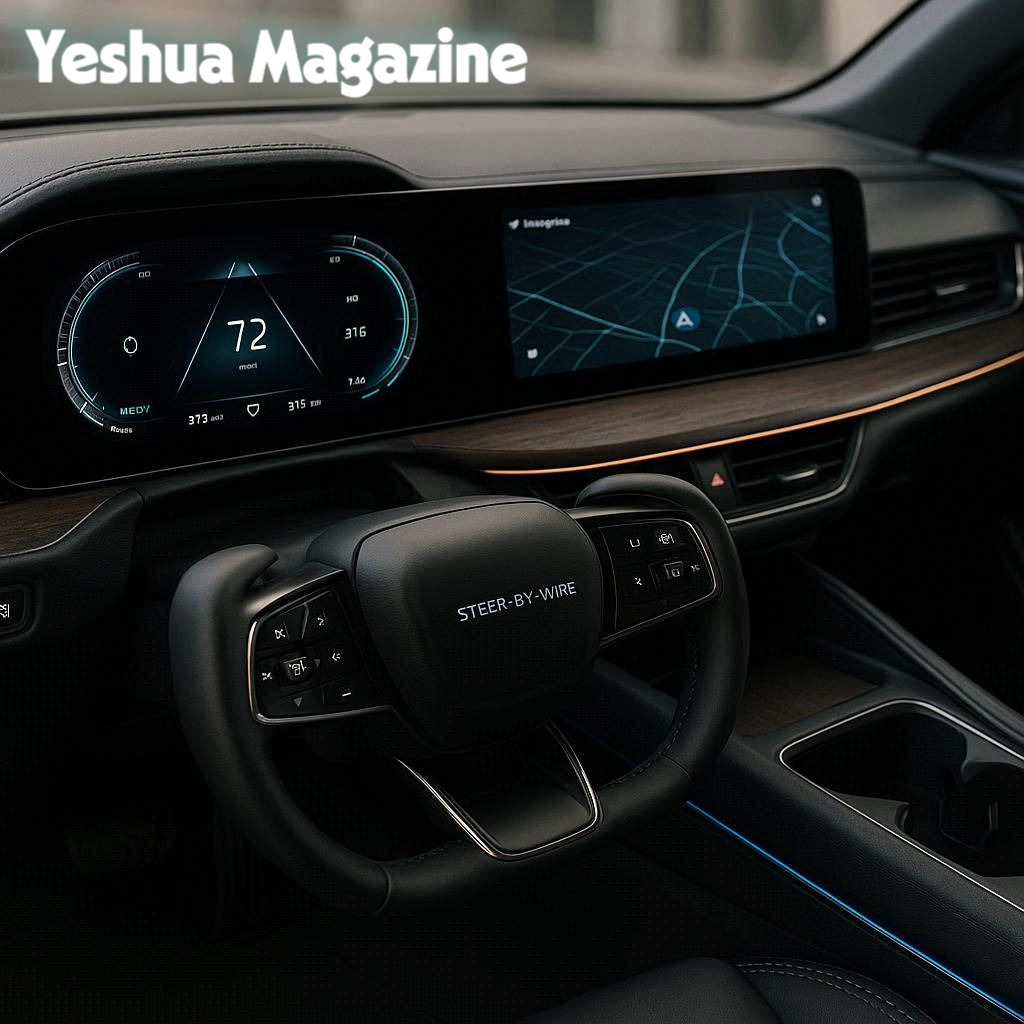


Steer-by-Wire Technology: The Future of Automotive Steering Systems
Introduction: The Evolution of Steering Technology
The automotive industry stands on the brink of a revolutionary transformation in how vehicles are controlled. Steer-by-wire technology represents one of the most significant innovations in vehicle control systems since power steering was introduced decades ago. This cutting-edge technology eliminates the traditional mechanical connection between the steering wheel and the wheels, replacing it with electronic signals and actuators.
As vehicles become increasingly automated and electrified, steer-by-wire systems are emerging as essential components for next-generation transportation. This comprehensive guide explores how this technology works, its advantages and challenges, current implementations, and what the future holds for digital steering systems.
What Is Steer-by-Wire Technology?
Steer-by-wire, also known as drive-by-wire steering, is an advanced automotive technology that removes the physical mechanical linkage between the steering wheel and the vehicle’s wheels. Instead of traditional steering columns, hydraulic systems, or electric power steering with mechanical backup, steer-by-wire uses electronic sensors, control units, and electric motors to translate driver input into wheel movement.
The Basic Components
A typical steer-by-wire system consists of several key components working together seamlessly. The steering wheel contains sensors that detect the driver’s input, measuring the angle, speed, and force of rotation. These sensors send electronic signals to a central control unit, which processes the information and calculates the appropriate wheel angle.
Electric actuators mounted at the wheels receive commands from the control unit and physically turn the wheels to the desired angle. A feedback motor in the steering wheel provides artificial resistance and feedback, simulating the road feel that drivers expect from traditional steering systems.
Redundant safety systems ensure reliability, with multiple sensors, control units, and power supplies providing backup in case of component failure. This redundancy is crucial for meeting automotive safety standards and gaining regulatory approval.
How Steer-by-Wire Differs from Traditional Steering
Traditional mechanical steering systems, whether manual or power-assisted, maintain a direct physical connection between the steering wheel and the wheels. When you turn the steering wheel, you’re physically moving components that directly angle the wheels.
Hydraulic power steering uses fluid pressure to reduce the effort needed to turn the wheel, while electric power steering employs an electric motor to assist, but both retain mechanical linkages as backup systems.
Steer-by-wire eliminates this physical connection entirely. Your steering input becomes digital data that computers interpret and execute. This fundamental difference enables capabilities impossible with mechanical systems while introducing new engineering challenges.
Advantages of Steer-by-Wire Technology
The elimination of mechanical steering components unlocks numerous benefits that improve vehicle design, performance, safety, and user experience.
Design Flexibility and Space Efficiency
Without a steering column penetrating the dashboard and firewall, automotive designers gain unprecedented freedom in cabin layout. The space traditionally occupied by steering mechanisms can accommodate larger batteries in electric vehicles, improved crash absorption zones, or more spacious interiors.
This flexibility becomes especially valuable in autonomous vehicles, where traditional driver positions may become obsolete. Seats can swivel, dashboards can transform into workspaces, and interior configurations can adapt to different use cases.
Enhanced Safety Features
Steer-by-wire systems can implement safety features impossible with mechanical steering. Advanced stability control can override driver input during emergency situations, preventing overcorrection and loss of control. The system can automatically adjust steering response based on speed, road conditions, and driving mode.
In crash scenarios, the absence of a rigid steering column reduces injury risk to the driver. The system can also prevent wheel movements that might cause rollover or excessive understeer during aggressive maneuvers.
Customizable Steering Feel
Different drivers prefer different steering characteristics. Steer-by-wire allows complete customization of steering weight, response ratio, and feedback. Sport mode can provide quick, direct steering with heavy feedback, while comfort mode offers lighter, more gradual response.
The steering ratio can vary dynamically—requiring fewer turns at low speeds for easy parking while becoming more gradual at highway speeds for stability. This variable ratio steering provides optimal control across all driving conditions.
Improved Fuel Efficiency
Eliminating hydraulic pumps and heavy mechanical components reduces vehicle weight and parasitic power losses. Electric actuators consume energy only when actively steering, unlike hydraulic systems that continuously operate pumps. In electric vehicles, this efficiency translates to extended range.
Easier Maintenance
Fewer mechanical components mean fewer wear items requiring replacement. There are no hydraulic fluids to leak or change, no universal joints to wear out, and no rack and pinion assemblies to rebuild. Maintenance becomes primarily software updates and occasional actuator replacement.
Challenges and Concerns
Despite compelling advantages, steer-by-wire technology faces significant obstacles preventing widespread adoption.
Reliability and Redundancy Requirements
Steering system failure can be catastrophic, making absolute reliability non-negotiable. Steer-by-wire systems require multiple redundant components, each adding cost and complexity. Every sensor, control unit, and actuator needs backup systems ensuring continued operation if primary components fail.
Meeting automotive safety standards like ISO 26262 requires extensive testing and validation. Manufacturers must prove that the probability of total system failure remains acceptably low across the vehicle’s lifetime.
Regulatory Hurdles
Many countries have regulations requiring mechanical steering backup systems. Changing these regulations requires convincing authorities that electronic systems can achieve equivalent or superior safety. This regulatory approval process can take years and varies by jurisdiction.
The lack of international regulatory harmonization complicates global vehicle sales, as manufacturers may need different steering systems for different markets.
Driver Acceptance and Trust
Drivers accustomed to direct mechanical feedback may resist the artificial feel of steer-by-wire systems. The psychological comfort of knowing a physical connection exists between steering wheel and wheels shouldn’t be underestimated.
Overcoming this resistance requires proving reliability through years of real-world operation and educating consumers about the technology’s benefits and safeguards.
Cost Considerations
Current steer-by-wire systems cost significantly more than conventional steering. The redundant components, sophisticated sensors, and advanced control algorithms contribute to higher manufacturing costs. Until production volumes increase and technology matures, this cost premium limits adoption to premium vehicles.
Cybersecurity Risks
Electronic steering systems create potential cybersecurity vulnerabilities. Hackers gaining control of steering could cause accidents, making robust security measures essential. Encryption, secure communications protocols, and intrusion detection systems add complexity and must evolve as hacking techniques advance.
Current Implementations and Real-World Examples
While full steer-by-wire systems remain rare in production vehicles, several manufacturers have introduced or announced implementations.
Infiniti introduced one of the first production steer-by-wire systems in their Q50 sedan, though it retained a mechanical backup clutch that could re-engage if the electronic system failed. This hybrid approach addressed regulatory requirements and consumer concerns while demonstrating the technology’s viability.
Lexus has implemented advanced steer-by-wire in some models, focusing on the improved steering response and customization capabilities the technology enables.
Several electric vehicle startups have announced plans for pure steer-by-wire systems without mechanical backup, betting that regulatory environments will evolve and that the technology’s benefits in EVs justify early adoption risks.
Commercial vehicles and specialized equipment have more readily adopted steer-by-wire technology, as these applications often face less stringent regulations and operators may prioritize the functional benefits over traditional driving feel.
The Role in Autonomous Vehicles
Steer-by-wire technology becomes nearly essential for fully autonomous vehicles. Self-driving systems require precise, computer-controlled steering without human intervention. The programmable nature of steer-by-wire enables the sophisticated control algorithms autonomous systems need.
Autonomous vehicles benefit from steer-by-wire’s ability to implement redundant control paths, ensuring that vehicle control remains possible even with component failures. The technology also enables rapid steering adjustments impossible with mechanical systems, improving obstacle avoidance and emergency maneuvers.
As autonomous technology advances, steer-by-wire and self-driving capabilities will likely develop together, each enabling improvements in the other.
Integration with Other Drive-by-Wire Systems
Steer-by-wire represents one component of broader drive-by-wire architectures replacing mechanical vehicle controls with electronic systems. Throttle-by-wire already dominates modern vehicles, while brake-by-wire systems are increasingly common, especially in hybrids and electric vehicles.
Integrating these systems creates opportunities for sophisticated vehicle dynamics control. Coordinated steering, braking, and acceleration can optimize handling, stability, and efficiency beyond what isolated mechanical systems achieve.
Full drive-by-wire architectures also simplify vehicle platforms, potentially reducing manufacturing complexity and enabling new vehicle designs impossible with traditional mechanical controls.
The Future of Steer-by-Wire Technology
The trajectory for steer-by-wire technology points toward increased adoption, driven by several converging trends.
Expanding Electric Vehicle Market
Electric vehicles benefit enormously from steer-by-wire technology. The space savings, weight reduction, and efficiency improvements align perfectly with EV design priorities. As electric vehicles become mainstream, steer-by-wire adoption will likely accelerate.
Autonomous Driving Advancement
As autonomous driving capabilities advance from current assisted driving features toward full self-driving, steer-by-wire becomes increasingly necessary. The technology provides the precise, reliable computer control autonomous systems require.
Regulatory Evolution
Regulatory bodies are gradually accepting steer-by-wire systems as manufacturers demonstrate their safety and reliability. International harmonization of standards will simplify global vehicle deployment and encourage wider adoption.
Cost Reduction Through Scale
As production volumes increase and technology matures, manufacturing costs will decline. Component standardization and improved manufacturing processes will make steer-by-wire economically viable for mainstream vehicles beyond current luxury applications.
Enhanced Capabilities
Future steer-by-wire systems will offer capabilities beyond current implementations. Predictive systems could adjust steering response based on upcoming road conditions detected by sensors or derived from map data. Integration with vehicle-to-vehicle communication could enable coordinated maneuvering in traffic.
Haptic feedback systems might provide rich information about road conditions, tire grip, and vehicle dynamics through the steering wheel, potentially exceeding the feedback mechanical systems provide.
Alternative Control Interfaces
Steer-by-wire enables reimagining how drivers control vehicles. Yoke-style controls, joysticks, or even touchscreen interfaces become possible when physical steering mechanisms are eliminated. While controversial, these alternative interfaces may find applications in specific vehicle types or autonomous vehicles with occasional manual control.
Standardization and Modularity
Industry-wide standards for steer-by-wire systems could emerge, enabling component interchangeability and reducing development costs. Modular systems adaptable to different vehicle types and sizes would accelerate adoption across manufacturer lineups.
Environmental and Sustainability Impact
Steer-by-wire contributes to automotive sustainability goals through multiple pathways. Weight reduction improves fuel efficiency or extends electric vehicle range, reducing lifetime energy consumption and emissions.
The elimination of hydraulic fluids removes environmental hazards from vehicle operation and disposal. Simplified maintenance reduces resource consumption over vehicle lifespans.
Enabling more efficient vehicle designs and supporting electrification, steer-by-wire technology supports broader transportation sustainability objectives.
Conclusion: Steering Toward a Digital Future
Steer-by-wire technology represents a fundamental transformation in automotive engineering, replacing century-old mechanical principles with digital control systems. While challenges remain around reliability, regulation, and consumer acceptance, the technology’s advantages are compelling enough to ensure its eventual widespread adoption.
The convergence of electrification, autonomous driving, and digital vehicle architectures creates powerful momentum for steer-by-wire systems. As manufacturers gain experience, costs decline, and regulatory frameworks adapt, this technology will transition from exotic luxury feature to mainstream standard.
For drivers, the transition to steer-by-wire promises safer, more efficient, and more capable vehicles. For the industry, it enables design innovations and capabilities impossible with mechanical steering. The steering wheel may look the same, but the technology behind it is entering a new era.
The question is no longer whether steer-by-wire will become standard, but how quickly the transformation will occur and what innovations it will enable along the way.
Frequently Asked Questions (FAQ)
Is steer-by-wire technology safe?
Yes, when properly designed with redundant systems. Modern steer-by-wire implementations include multiple backup sensors, control units, and power supplies to ensure continued operation if primary components fail. These systems must meet stringent automotive safety standards before regulatory approval. However, as with any technology, safety depends on proper design, manufacturing quality, and maintenance.
What happens if the steer-by-wire system fails while driving?
Redundant safety systems activate immediately. Multiple parallel control paths ensure at least one system remains operational. Warning alerts notify the driver of degraded operation, and the vehicle may enter a safe mode with reduced performance until repairs are completed. In catastrophic scenarios, some systems include mechanical backup clutches that can re-engage traditional steering.
Can steer-by-wire systems be hacked?
Like any electronic system, steer-by-wire has potential cybersecurity vulnerabilities. Manufacturers implement encryption, secure communication protocols, authentication systems, and intrusion detection to prevent unauthorized access. Multiple isolated control systems make complete takeover extremely difficult. Cybersecurity measures continue evolving as threats develop.
Does steer-by-wire feel different from traditional steering?
Yes, though manufacturers work to replicate traditional steering feel. The feedback is artificially generated rather than mechanically transmitted, which some drivers notice. However, the programmable nature allows customization of steering weight, response, and feedback to match or exceed traditional systems. Driver preference varies—some prefer the precise, consistent feel while others miss purely mechanical feedback.
Which cars currently have steer-by-wire technology?
Several production vehicles have implemented steer-by-wire systems, though many retain mechanical backup. The Infiniti Q50 was among the first mainstream vehicles with this technology. Lexus has introduced it in select models. Several electric vehicle manufacturers have announced pure steer-by-wire systems without mechanical backup. Availability varies by market due to regulatory differences.
Will steer-by-wire eliminate steering wheels entirely?
Not in the near term for vehicles requiring human control. Steering wheels provide intuitive, familiar interfaces most drivers prefer. However, in fully autonomous vehicles, traditional steering wheels may become optional or replaced with alternative controls. Some concepts feature retractable or removable steering wheels, appearing only when manual driving is needed or desired.
How much does steer-by-wire add to vehicle cost?
Current systems add significant cost due to redundant components and sophisticated technology. Estimates vary, but premium systems may add several thousand dollars to manufacturing costs. As production volumes increase and technology matures, costs will decline. The overall value proposition includes weight savings, design flexibility, and enhanced capabilities that may justify the premium.
Is steer-by-wire better for electric vehicles?
Yes, steer-by-wire offers particular advantages for EVs. It eliminates parasitic power losses from hydraulic systems, extending range. The space savings accommodate larger batteries. Weight reduction improves efficiency. The technology integrates naturally with EV electronic architectures. These benefits make steer-by-wire especially attractive for electric vehicle applications.