

Introduction
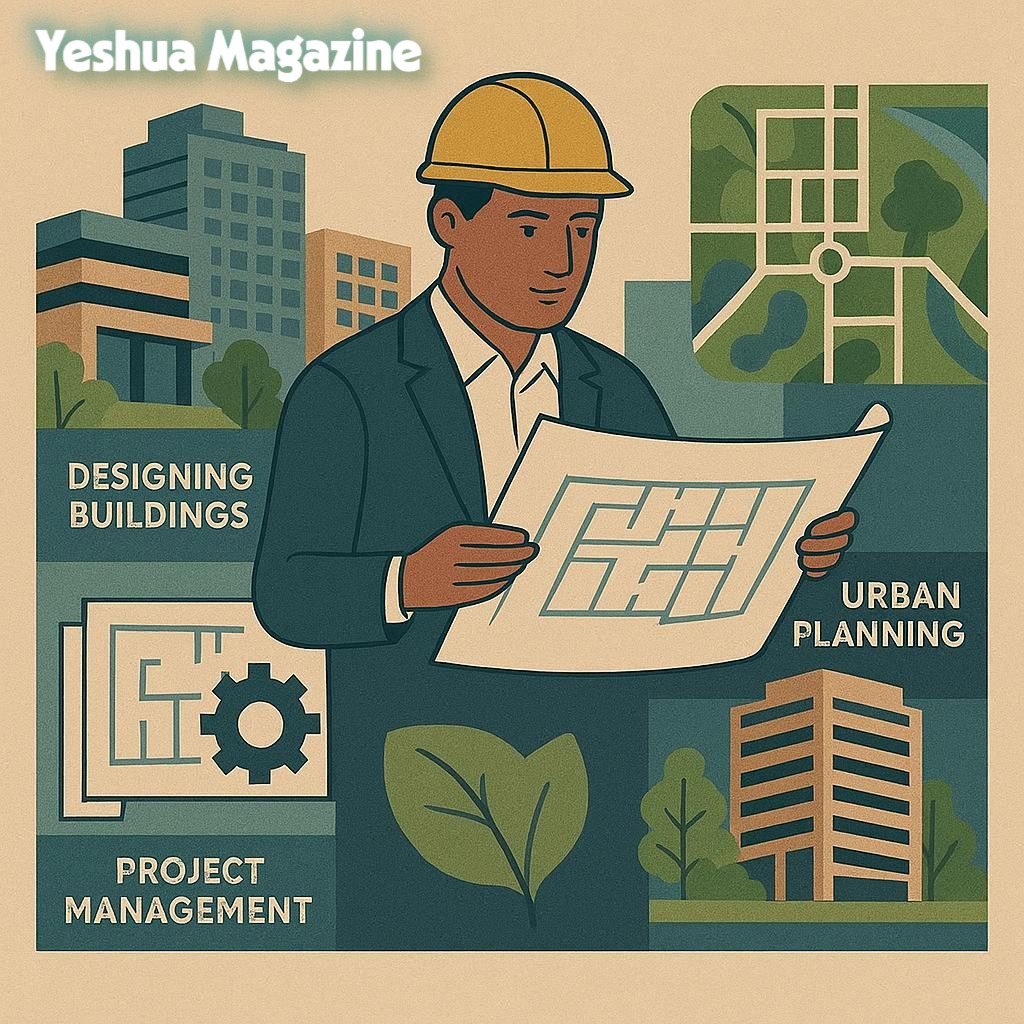
Architecture stands as one of humanity’s oldest and most essential professions. Moreover, it evolves continuously to meet the changing needs of society. Today’s architects are far more than designers of buildings. As visionaries, problem-solvers, environmental stewards, and cultural interpreters, they shape the very fabric of our communities.
As we navigate the complexities of the 21st century, the role of architects has never been more critical. Specifically, climate change, rapid urbanization, and technological advancement demand innovative solutions. Professionals in this field actively address these challenges at the forefront of change.
The Multidimensional Role of Contemporary Architects
Designing Functional and Aesthetic Spaces
At its core, architecture remains the art and science of designing buildings and structures that serve human needs. Architects create spaces where people live, work, learn, heal, worship, and gather. Furthermore, this fundamental responsibility requires balancing aesthetic vision with practical functionality.
Every project must address essential questions. For instance, how will people use these spaces? Who will inhabit them? How will design choices impact daily life? Ultimately, these considerations shape every decision architects make.
Modern architects employ sophisticated design methodologies. Consequently, they integrate user experience research, spatial psychology, and ergonomic principles into their work. Additionally, they give careful attention to sight lines, circulation patterns, and natural light penetration. Acoustic properties and countless other factors determine whether a space feels welcoming or alienating, efficient or frustrating.
In the end, the best architectural designs become intuitive. Users navigate them effortlessly, often without conscious awareness of the careful planning behind every detail.
Guardians of Sustainability and Environmental Responsibility
Perhaps no aspect of contemporary architecture has grown more urgent than environmental sustainability. Today’s architects serve as frontline defenders in the battle against climate change. Indeed, designing buildings that minimize environmental impact throughout their entire lifecycle has become a core responsibility.
Buildings account for approximately 40 percent of global energy consumption. Additionally, they contribute substantially to greenhouse gas emissions. Therefore, architectural decisions carry enormous environmental consequences.
Sustainable architecture encompasses far more than installing solar panels or green roofs. Instead, it requires comprehensive thinking about material selection and energy efficiency. Similarly, water conservation, waste reduction, and integration with natural systems are all critical factors.
Architects now routinely incorporate passive design strategies. These harness natural ventilation, daylighting, and thermal mass to reduce mechanical heating and cooling needs. Moreover, they specify materials with low embodied carbon whenever possible. Consequently, designs for disassembly and future adaptability have become standard practice. Furthermore, buildings that generate their own renewable energy are increasingly common.
Progressive architects also consider broader ecological impacts. For example, they design buildings that support biodiversity with care. Additionally, they manage stormwater naturally and prioritize positive contributions to local ecosystems. This holistic environmental stewardship represents a fundamental shift. Buildings are no longer viewed as isolated objects but as integrated components of larger natural and urban systems.
Urban Planners and Community Shapers
Architects play crucial roles in shaping cities and communities. In fact, their work spans scales ranging from individual buildings to entire neighborhoods and urban districts. Through thoughtful site planning, mixed-use development, and attention to public realm quality, these professionals help create vibrant, walkable communities. As a result, these spaces foster social interaction and civic life.
Contemporary urban challenges demand architectural solutions that address multiple needs simultaneously. Specifically, architects must balance density, connectivity, and livability. They design transit-oriented developments that reduce car dependency with intention. Similarly, they create affordable housing that maintains dignity and quality through innovative approaches. Furthermore, they revitalize neglected urban areas while respecting existing communities.
Additionally, they support placemaking initiatives that give neighborhoods distinctive character and identity. Meanwhile, they carefully design public spaces that become beloved community gathering points.
The architect’s role in community development extends to social equity considerations. Notably, thoughtful design can either reinforce or break down barriers between different socioeconomic groups. Socially conscious architects create inclusive spaces that welcome diverse populations. Moreover, they design affordable housing with dignity in mind to avoid stigmatization. Ultimately, quality design should benefit all members of society, not just wealthy clients.
Technology Integrators and Innovators
Digital technologies have revolutionized modern architectural practice. In particular, they transform every phase of the design and construction process. Building Information Modeling (BIM) allows architects to create detailed three-dimensional digital representations of buildings. These contain comprehensive information about every component.
As a result, this technology enables better coordination between design disciplines. Consequently, more accurate cost estimation and smoother construction processes result from these innovations.
Architects increasingly employ computational design tools. These use algorithms to generate and optimize design solutions. Remarkably, they can explore thousands of variations to find optimal configurations for complex problems. In addition, parametric modeling allows designs to respond dynamically to changing requirements.
Virtual and augmented reality technologies enable clients and stakeholders to experience designs before construction begins. Therefore, better communication and decision-making result from these immersive experiences.
Beyond design tools, architects must understand and integrate smart building technologies. Automated systems and digital infrastructure make buildings responsive and adaptive. Specifically, they specify building management systems that optimize energy use. Furthermore, they design for future technological upgrades as standard practice. Additionally, they must carefully consider how buildings will interface with smart city infrastructure.
Cultural Interpreters and Historical Stewards
Architecture serves as a physical manifestation of cultural values, aspirations, and identity. Architects interpret cultural contexts and create buildings that resonate with local traditions while addressing contemporary needs. This cultural dimension of architecture becomes especially important in an increasingly globalized world. In fact, maintaining distinctive local character requires conscious effort.
Architects also serve as stewards of architectural heritage. Specifically, they preserve, restore, and adaptively reuse historic buildings as essential work. Heritage conservation requires specialized knowledge about traditional construction methods, materials, and design principles.
Successful adaptive reuse projects breathe new life into old buildings. Furthermore, they honor historical significance while making buildings relevant for contemporary use. These projects embody sustainable principles by preserving embodied energy and cultural memory. As a result, they avoid demolition waste.
The challenge of working within historic contexts demands sensitivity and creativity. Architects must decide how new interventions relate to existing fabric. For example, should they create contrast, harmony, or dialogue between old and new? Ultimately, these decisions shape how communities understand their own history and identity.
Collaborative Leaders and Project Coordinators
Modern building projects involve dozens of specialized consultants, engineers, contractors, and stakeholders. As integrators, architects coordinate these diverse inputs into coherent design solutions. This leadership role requires exceptional communication skills. Furthermore, diplomatic negotiation abilities and comprehensive understanding of all building systems and disciplines are essential.
Architects facilitate collaboration between structural engineers who ensure buildings stand safely. Meanwhile, mechanical engineers design climate control systems. Similarly, landscape architects shape exterior environments. In addition, lighting designers create atmospheric effects while numerous other specialists contribute their expertise.
Architects must balance competing priorities and mediate conflicts. At the same time, they maintain design vision while incorporating technical requirements from multiple sources.
The collaborative dimension extends to engaging clients, users, community members, and regulatory authorities throughout the design process. Participatory design approaches involve stakeholders directly in shaping projects. Consequently, buildings genuinely serve their intended communities through this approach. This democratic method produces better outcomes and builds public support and understanding.
Addressing Contemporary Challenges
Climate Adaptation and Resilience
As climate change intensifies, architects must design buildings that withstand increasingly severe weather events. Rising temperatures and changing precipitation patterns demand new approaches. Resilient design considers how buildings will perform during extreme conditions. For instance, can they continue functioning when infrastructure fails? How do they support community recovery after disasters?
Coastal architects design for sea-level rise and storm surge. Meanwhile, those in arid regions address water scarcity and extreme heat. Similarly, northern architects prepare for changing freeze-thaw cycles and permafrost degradation. This localized, climate-responsive design thinking represents architecture’s adaptive response to environmental instability.
Affordable Housing Crisis
Many cities worldwide face severe affordable housing shortages. Consequently, social stability and economic vitality face significant threats. Architects contribute solutions through innovative housing typologies. Specifically, modular construction approaches and designs that reduce construction and operating costs without sacrificing quality or dignity offer hope.
Progressive housing architects explore co-housing models, micro-apartments, and flexible dwelling units. These adapt to changing household compositions. Furthermore, they actively advocate for policy changes that enable more humane affordable housing. As these professionals demonstrate, good design need not be expensive luxury reserved for wealthy clients.
Health and Wellbeing
Growing evidence links building design to occupant health, productivity, and psychological wellbeing. Therefore, architects now prioritize conscious design for health outcomes. They incorporate principles of biophilic design that connect people with nature. Additionally, they maximize natural light exposure and ensure good indoor air quality. Moreover, they create spaces that support physical activity and social connection.
The COVID-19 pandemic heightened awareness of how buildings impact disease transmission. Specifically, ventilation quality and spatial flexibility became critical concerns. Post-pandemic architecture reflects lessons learned about adaptability. Consequently, outdoor connections and residential environments that support diverse activities have become priorities.
The Future of Architectural Practice
The architectural profession continues evolving rapidly in response to technological, environmental, and social changes. Future architects will likely work more collaboratively across traditional professional boundaries. In particular, architecture will increasingly integrate with engineering, ecology, social science, and data analysis.
Artificial intelligence and machine learning will augment design capabilities. However, these technologies raise questions about creativity and professional identity.
Circular economy principles will reshape how architects think about materials. Specifically, they will design buildings as material banks whose components can be recovered and reused. Additionally, renovation, adaptation, and urban regeneration will dominate rather than new construction. This reflects sustainability imperatives and the reality that most future buildings already exist.
Despite technological changes, the fundamental value architects provide remains constant. They translate complex human needs and aspirations into built form. Moreover, they enrich life, respect environmental limits, and contribute beauty and meaning to our shared world.
Conclusion
Architects occupy a unique position in modern society. They bridge art and science, aesthetics and functionality, individual vision and collective needs. Their work shapes the physical environment in which all human activity unfolds. Consequently, they influence how we live, work, interact, and experience daily life.
As society confronts urgent challenges from climate change to social inequality, architects provide essential expertise and creative vision. Together, they are building a more sustainable, equitable, and beautiful world. The profession’s evolution reflects growing recognition that buildings profoundly impact environmental systems, public health, social cohesion, and cultural identity.
By embracing expanded responsibilities as environmental stewards, social advocates, and technological innovators, architects continue demonstrating their indispensable value. They maintain traditional commitments to beauty and functionality while meeting the unprecedented challenges of our time.
Frequently Asked Questions About Architects and Architecture
Understanding the Architectural Profession
What exactly does an architect do?
Architects design buildings and structures while managing all aspects of the design and construction process. They create detailed plans and specifications. Additionally, they coordinate with engineers and consultants. They ensure compliance with building codes and regulations. Furthermore, they oversee projects from initial concept through construction completion.
Beyond technical responsibilities, architects balance client needs and budget constraints. Moreover, they integrate aesthetic goals and environmental considerations. Ultimately, their work creates functional, beautiful, and sustainable spaces.
Why are architects important for society?
Architects shape the built environment that defines our daily experiences and influences our quality of life. They create safe, functional buildings that meet human needs. Additionally, they contribute significantly to community character and cultural identity.
They also address critical societal challenges. For instance, they combat climate change through sustainable design. Similarly, they tackle housing affordability through innovative solutions. Moreover, they promote public health through design that enhances wellbeing. Their work impacts environmental sustainability, economic vitality, and social equity.
Sustainability and Environmental Impact
How do architects contribute to sustainability?
Architects advance sustainability through energy-efficient building design. They integrate renewable energy systems. Furthermore, they select sustainable materials and implement water conservation systems. In addition, they develop strategies that reduce construction waste.
They employ passive design techniques that minimize mechanical heating and cooling. Moreover, they design buildings that generate their own power. They specify materials with low environmental impact. Additionally, they create adaptable structures with long lifespans. Many architects pursue green building certifications like LEED, which verify sustainable design strategies.
Skills and Technology in Architecture
What skills do modern architects need?
Contemporary architects require diverse skills. Creative design ability is fundamental. Additionally, technical knowledge of building systems and construction methods is essential. They need proficiency with digital design tools like CAD and BIM software. Furthermore, understanding structural principles and building codes is necessary.
Project management capabilities are important. Similarly, strong communication skills for client and team interaction are vital. Moreover, knowledge of sustainability principles is increasingly critical. They also need business acumen and problem-solving abilities. Ultimately, they must integrate input from multiple disciplines into coherent design solutions.
How has technology changed architecture?
Technology has revolutionized architectural practice. Building Information Modeling (BIM) creates comprehensive digital building representations. Furthermore, computational design tools generate and optimize complex forms. Virtual reality allows clients to experience designs before construction begins. In addition, parametric modeling enables responsive, adaptable designs.
Digital fabrication technologies enable precise construction of complex geometries. Consequently, these tools improve design quality. They enhance collaboration and reduce errors. As a result, architects can explore more innovative solutions while maintaining technical rigor.
Scope of Architectural Work
Do architects only design new buildings?
No, architects work on diverse project types. They handle renovations, historic preservation, and adaptive reuse of existing buildings. Additionally, they pursue interior design, urban planning, and landscape architecture integration. They also provide consulting on building performance.
Many architects specialize in transforming and updating existing structures rather than designing new construction. As sustainability concerns grow, renovation and adaptive reuse represent increasingly important aspects of architectural practice. These approaches preserve embodied energy and cultural heritage while meeting contemporary needs.