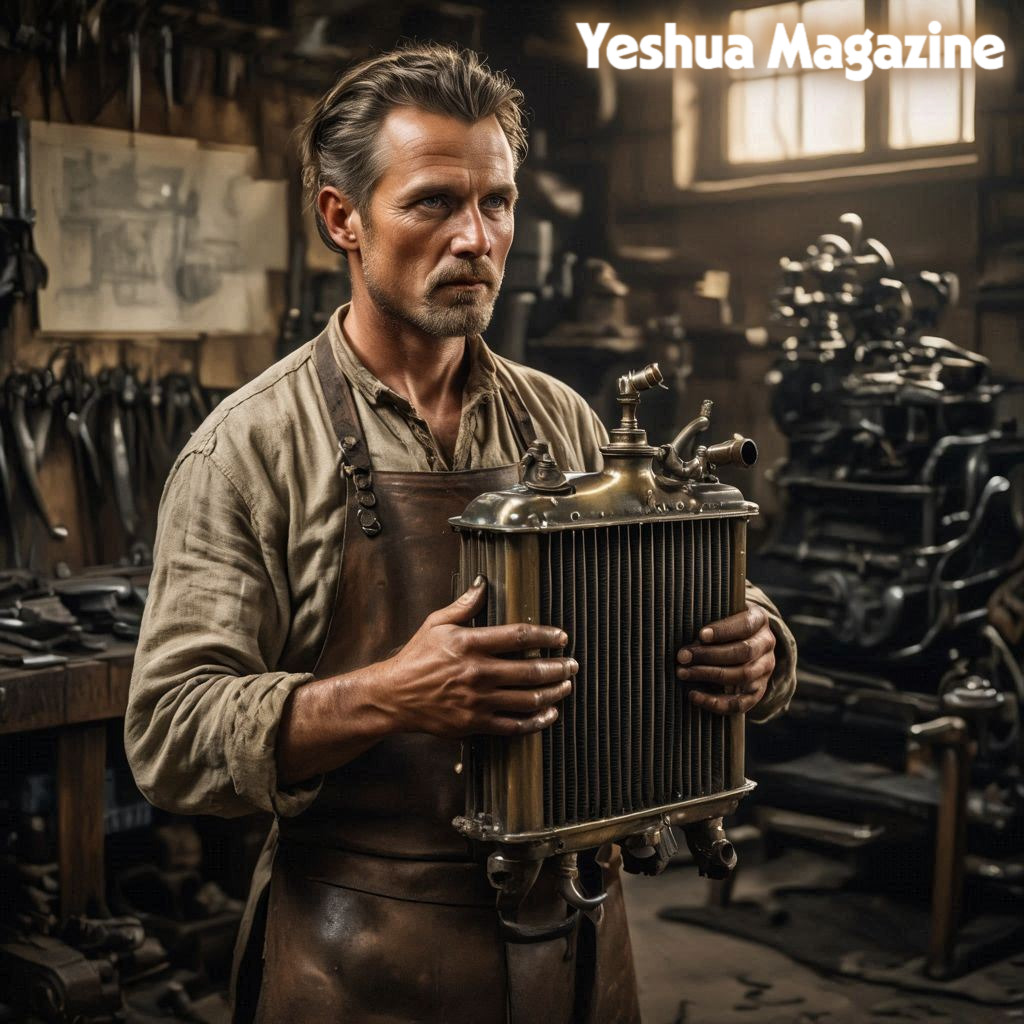


Discover who invented the car radiator and why this revolutionary cooling system became essential for modern vehicles. Learn about Wilhelm Maybach’s innovation that changed automotive history.
Introduction
The automobile radiator stands as one of the most critical yet often overlooked innovations in automotive history. While many celebrate the invention of the internal combustion engine or the assembly line, few recognize the genius behind the cooling system that made modern driving possible. Wilhelm Maybach, a German engineer and automotive pioneer, invented the honeycomb radiator in 1897, fundamentally transforming how vehicles manage engine heat and paving the way for more powerful, reliable automobiles.
Understanding who invented the car radiator and why this component became indispensable reveals fascinating insights into automotive evolution. Without effective cooling systems, today’s high-performance engines simply could not exist. This article explores the remarkable story of the radiator’s invention, its technical importance, and its lasting impact on transportation.
Wilhelm Maybach: The Forgotten Genius Behind the Radiator
Early Life and Engineering Background
Wilhelm Maybach, born in 1846 in Heilbronn, Germany, emerged as one of the most influential yet underappreciated figures in automotive history. After losing his parents at a young age, Maybach found refuge in an orphanage where his mechanical aptitude quickly became apparent. His exceptional talent caught the attention of educators who facilitated his engineering education.
In 1865, Maybach began working at a machine tool company where he met Gottlieb Daimler, a partnership that would reshape transportation forever. Together, they developed numerous innovations that laid the groundwork for modern automobiles, with the radiator standing among their most significant contributions.
The Partnership with Gottlieb Daimler
Maybach and Daimler formed an extraordinary engineering duo. While Daimler possessed entrepreneurial vision and leadership skills, Maybach brought meticulous technical expertise and innovative problem-solving abilities. This complementary relationship produced breakthrough after breakthrough in early automotive technology.
Working at Daimler’s workshop in Cannstatt, Germany, Maybach focused on refining engine designs and addressing practical challenges that prevented automobiles from becoming reliable transportation methods. The overheating problem represented one of the most persistent obstacles facing early motorists.
The Invention of the Honeycomb Radiator
The Problem That Needed Solving
Early automobiles faced a critical challenge: engines generated tremendous heat during operation, and without adequate cooling, they would quickly overheat, seize, and fail. Initial attempts at cooling involved rudimentary water jackets around cylinders, but these proved insufficient for sustained operation or higher speeds.
Engineers experimented with various cooling methods, including air cooling and simple water circulation systems, but none provided the efficiency needed for practical, everyday vehicle use. The automotive industry desperately needed a revolutionary solution.
Maybach’s Breakthrough Design
In 1897, Maybach introduced his honeycomb radiator design, a brilliant innovation that maximized surface area while maintaining compact dimensions. The radiator featured numerous small tubes arranged in a pattern resembling a honeycomb, dramatically increasing the contact area between hot coolant and cooling air.
This design allowed heat to dissipate rapidly and efficiently. As hot coolant from the engine flowed through the radiator’s tubes, air passing over and through the structure absorbed the heat, cooling the liquid before it returned to the engine. The honeycomb pattern optimized this heat exchange process, making it far more effective than previous cooling methods.
Technical Innovation and Engineering Excellence
Maybach’s radiator incorporated several key innovations that demonstrated his engineering mastery. The honeycomb structure provided maximum cooling surface area within a minimal space, crucial for the compact engine compartments of early automobiles. The design also allowed for natural convection and airflow enhancement when vehicles moved, creating a self-regulating cooling effect.
The materials and construction methods Maybach employed ensured durability and resistance to the corrosive effects of water and temperature fluctuations. This attention to practical engineering details separated his invention from theoretical concepts, creating a solution that actually worked in real-world conditions.
Why the Car Radiator Became Critically Important
Enabling Engine Performance and Power
The radiator’s importance cannot be overstated. It enabled engineers to develop more powerful engines without fear of catastrophic overheating. Before effective radiators, engine designers faced severe limitations on compression ratios, cylinder sizes, and operating speeds. Maybach’s cooling solution removed these constraints, unleashing tremendous innovation in engine technology.
Higher-performance engines could now run reliably for extended periods, transforming automobiles from experimental curiosities into practical transportation vehicles. This advancement directly contributed to the automobile’s growing popularity and commercial viability in the early twentieth century.
Protecting Engine Components and Longevity
Proper temperature regulation protects critical engine components from heat-related damage. Metal parts expand when heated, and excessive temperatures can cause warping, cracking, and premature wear. Gaskets and seals deteriorate rapidly under extreme heat, leading to leaks and failures.
The radiator maintains optimal operating temperatures, typically between 195 and 220 degrees Fahrenheit, ensuring engine components function within their designed parameters. This temperature control dramatically extends engine life, reduces maintenance costs, and improves reliability—factors that made automobiles economically feasible for average consumers.
Supporting Lubrication Systems
Engine oil serves multiple critical functions, including lubrication and heat dissipation. However, oil’s viscosity and protective properties degrade rapidly at elevated temperatures. Without adequate cooling, engine oil breaks down, loses its lubricating effectiveness, and allows metal-on-metal contact that destroys engine components.
The radiator system helps maintain oil at optimal temperatures, preserving its protective qualities and ensuring proper lubrication throughout the engine. This synergy between cooling and lubrication systems represents essential engineering integration that Maybach’s innovation facilitated.
Preventing Fuel Combustion Issues
Temperature significantly affects fuel combustion efficiency and timing. Excessively hot engines experience pre-ignition or “knocking,” where fuel ignites prematurely, causing engine damage and reduced performance. Conversely, engines running too cool burn fuel inefficiently, wasting energy and producing excessive emissions.
The radiator enables precise temperature management, ensuring optimal combustion conditions. This control improves fuel efficiency, reduces emissions, and maximizes power output—benefits that remain critically important in modern automotive engineering.
Evolution of Radiator Technology Since Maybach
Modern Radiator Designs
While Maybach’s fundamental concept remains unchanged, radiator technology has evolved significantly. Contemporary radiators use aluminum construction for improved heat transfer and reduced weight. Advanced fin designs and tube configurations optimize airflow and cooling efficiency beyond what early engineers could achieve.
Modern radiators also integrate with complex cooling systems featuring thermostats, electric fans, coolant reservoirs, and electronic monitoring systems. These components work together to maintain precise temperature control under varying operating conditions, from idling in traffic to high-speed highway driving.
Materials and Manufacturing Advances
Early radiators used brass and copper construction, which provided good heat transfer but added considerable weight. Modern radiators typically employ aluminum, which offers excellent thermal conductivity while weighing significantly less. Advanced manufacturing techniques allow for intricate designs that maximize cooling efficiency.
Plastic components now commonly appear in radiator construction, particularly for tanks and mounting points. These materials reduce weight, resist corrosion, and lower manufacturing costs while maintaining structural integrity and performance standards.
Integration with Modern Engine Management
Today’s radiators function as integral components of sophisticated engine management systems. Electronic sensors continuously monitor coolant temperature, triggering computer-controlled responses like fan activation or thermostat adjustment. This integration ensures optimal performance, efficiency, and emissions control.
Advanced vehicles incorporate additional cooling circuits for turbochargers, transmissions, and other components, demonstrating how Maybach’s basic radiator concept has expanded to meet modern automotive complexity.
The Radiator’s Impact on Automotive Industry Development
Enabling Mass Production and Reliability
Henry Ford’s assembly line revolution depended on reliable components that could be manufactured consistently and perform dependably. Maybach’s radiator design met these requirements, contributing to the automobile’s transformation from luxury item to mass-market product.
Reliable cooling meant fewer breakdowns, reduced maintenance, and greater customer satisfaction—factors essential for building consumer confidence in automobile technology. This reliability helped establish automobiles as practical transportation rather than unreliable novelties.
Supporting Automotive Innovation and Progress
The radiator’s effectiveness freed engineers to pursue ambitious innovations in engine design, vehicle performance, and automotive capabilities. Racing developments, luxury vehicles, commercial trucks, and countless other automotive segments benefited from reliable temperature management.
Without Maybach’s cooling innovation, the automotive industry’s rapid twentieth-century expansion would have been impossible. Every advancement in engine technology, from multi-cylinder configurations to fuel injection systems, relied on effective cooling to function reliably.
Global Transportation Transformation
The automobile’s rise as the dominant personal transportation mode reshaped societies, economies, and landscapes worldwide. Cities expanded, suburbs developed, and personal mobility became accessible to billions of people. While many innovations contributed to this transformation, reliable cooling systems played an essential supporting role.
Maybach’s radiator helped make automobiles dependable enough for daily use, long-distance travel, and commercial applications. This reliability proved crucial for the automobile’s acceptance and integration into modern life.
Maintaining Your Car’s Radiator: Honoring Maybach’s Legacy
Understanding Radiator Maintenance Importance
Modern vehicle owners benefit directly from Maybach’s century-old innovation, but this critical component requires regular maintenance to function properly. Coolant should be flushed and replaced according to manufacturer specifications, typically every 30,000 to 50,000 miles or every few years.
Regular inspections for leaks, damage, or corrosion help identify problems before they cause engine damage. Maintaining proper coolant levels and mixture ratios ensures optimal heat transfer and freeze protection.
Signs of Radiator Problems
Warning signs of radiator issues include engine overheating, coolant leaks, discolored coolant, or unusual temperature gauge readings. Addressing these symptoms promptly prevents costly engine damage and maintains vehicle reliability.
Modern diagnostic tools can identify cooling system problems early, allowing preventive repairs that save money and extend vehicle life. This maintenance accessibility reflects how far automotive technology has progressed since Maybach’s era.
Conclusion: Wilhelm Maybach’s Enduring Automotive Legacy
Wilhelm Maybach invented the car radiator in 1897, creating a cooling solution that became absolutely essential for automotive development. His honeycomb radiator design enabled more powerful, reliable engines and transformed automobiles from experimental machines into practical transportation vehicles that changed the world.
The radiator’s importance extends far beyond simple cooling. It protects engine components, supports lubrication systems, optimizes fuel combustion, and enables the high-performance engines modern drivers depend on daily. Every vehicle on the road today incorporates cooling technology descended directly from Maybach’s innovative design.
While Maybach never achieved the fame of contemporaries like Henry Ford or Karl Benz, his contributions proved equally significant. The radiator represents engineering excellence at its finest: a elegant solution to a critical problem that enabled unprecedented technological progress.
Understanding who invented the car radiator and recognizing its importance provides valuable perspective on automotive history and the brilliant engineers whose innovations shaped modern transportation. Wilhelm Maybach’s legacy lives on in every vehicle, reminding us that sometimes the most crucial innovations work quietly behind the scenes, making everything else possible.