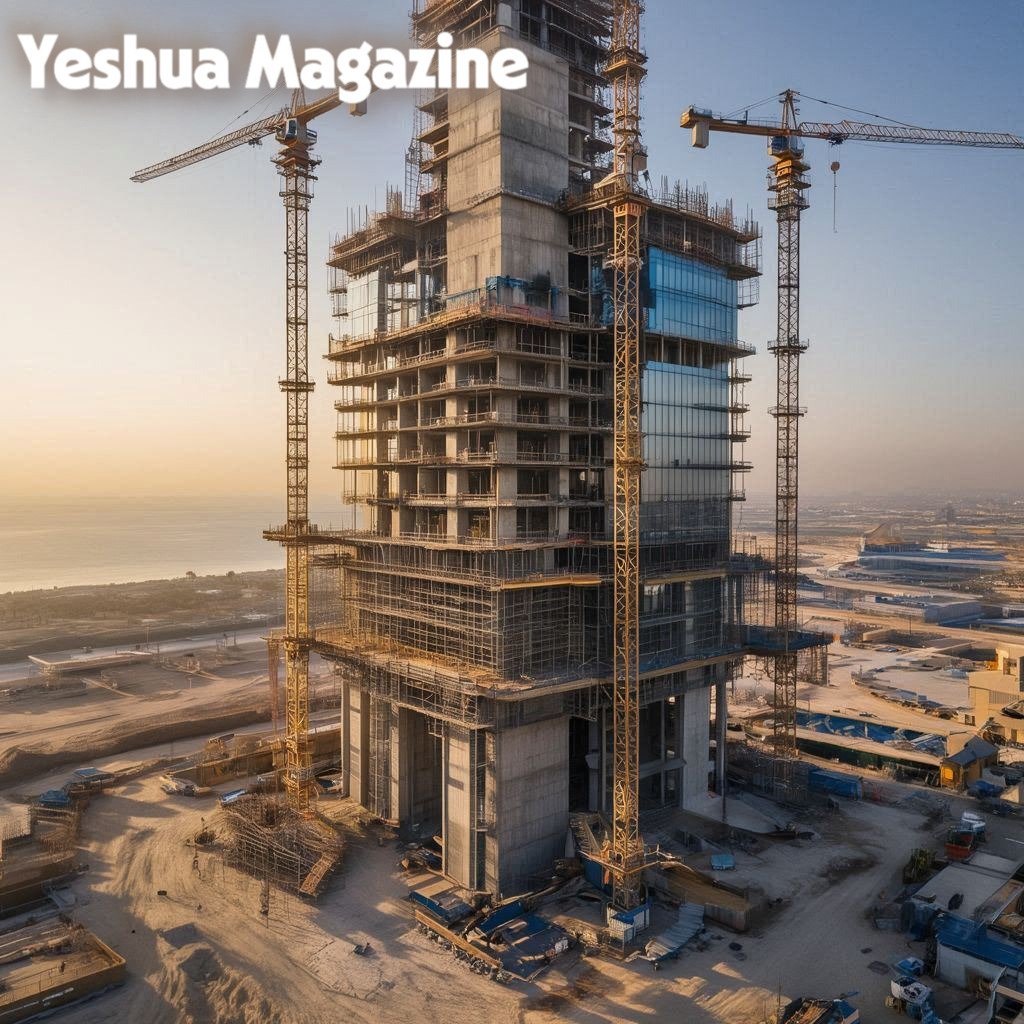


The human ambition to reach the sky has driven architectural innovation for millennia. From the ancient pyramids to modern skyscrapers, each generation pushes boundaries further. The Jeddah Tower in Saudi Arabia represents humanity’s boldest vertical vision yet—a structure designed to soar beyond one kilometer into the atmosphere, redefining what’s possible in engineering and construction.
This architectural masterpiece isn’t just about height. It embodies cutting-edge technology, revolutionary design thinking, and engineering solutions that challenge the fundamental laws of physics. Understanding how engineers conceptualize and execute such ambitious projects reveals the extraordinary intersection of human creativity, mathematical precision, and technological advancement.
The Visionary Behind the Design
The Jeddah Tower owes its striking form to Adrian Smith, the legendary architect who previously designed the Burj Khalifa in Dubai. Smith, working with his firm Adrian Smith + Gordon Gill Architecture, approached the Jeddah Tower with lessons learned from the world’s current tallest building and a vision to surpass it dramatically.
Smith’s design philosophy centers on biomimicry—drawing inspiration from natural forms that have withstood environmental forces for millions of years. The Jeddah Tower’s tripartite design, resembling a bundle of leaves sprouting from a single stem, reflects this organic approach. The tower’s footprint features a three-petal plan that reduces wind resistance while creating visual elegance.
Gordon Gill, Smith’s partner, contributed crucial insights into sustainable design elements. Their collaboration represents decades of experience in supertall construction, making them uniquely qualified to tackle a project of this unprecedented scale. The design team also included landscape architect Javier Ponce, who integrated the tower seamlessly into its surrounding development.
The aesthetic inspiration draws from the desert folded fronds and the robust, upward growth of regional vegetation. This cultural sensitivity ensures the tower resonates with its Saudi Arabian context while achieving universal architectural significance.
How Engineers Conceptualize Kilometer-High Structures
Designing a structure exceeding one kilometer requires fundamentally rethinking traditional engineering approaches. Engineers don’t simply scale up existing designs—they must solve entirely new problems that emerge at extreme heights.
The conceptual process begins with understanding forces that become exponentially more challenging at supertall heights. Wind loads at one kilometer altitude behave differently than at typical skyscraper heights. Engineers must account for wind speeds that can exceed 200 kilometers per hour, creating lateral forces capable of moving the building’s top several meters.
Gravity presents another unique challenge. The sheer weight of materials needed to construct a kilometer-high tower creates compressive forces at the base that exceed anything in conventional construction. Engineers calculated that traditional steel and concrete alone couldn’t support the necessary structure without becoming prohibitively heavy and expensive.
Temperature differentials also complicate design. The base of the Jeddah Tower experiences different temperatures than areas hundreds of meters higher. This thermal variation causes materials to expand and contract at different rates throughout the structure, requiring sophisticated expansion joints and material selections.
Earthquake resistance adds another layer of complexity. While Jeddah isn’t in a major seismic zone, any structure this tall must withstand potential tremors. The foundation extends deep into the earth, with piles reaching bedrock to ensure stability.
The engineering team, led by structural engineering firm Thornton Tomasetti, employed advanced computer modeling to simulate thousands of scenarios. These digital twins allowed engineers to test the building’s response to various conditions before construction began, identifying potential weaknesses and optimizing the design.
Revolutionary Foundation Technology
The Jeddah Tower’s foundation represents one of the project’s most impressive engineering achievements. To support over 252,000 tons of building mass, engineers designed a foundation system that goes far beyond conventional approaches.
The foundation consists of a massive reinforced concrete mat measuring 60 meters in diameter and nearly 5 meters thick. This creates a solid platform distributing the tower’s enormous weight across a large area. Below this mat, 270 bored piles extend approximately 60-110 meters deep into the earth, reaching stable rock layers.
Creating these foundation piles required specialized drilling equipment capable of penetrating dense geological layers. Each pile was filled with high-strength concrete and reinforced with steel cages to create columns of exceptional load-bearing capacity.
The foundation also incorporates sophisticated waterproofing systems. Jeddah’s coastal location means groundwater management is crucial. Engineers installed multiple barriers to prevent water infiltration that could compromise structural integrity over the building’s lifespan.
Advanced monitoring systems embedded in the foundation continuously measure stress, settlement, and movement. These sensors provide real-time data ensuring the foundation performs as designed, allowing engineers to detect any anomalies before they become problems.
Structural Systems: The Skeletal Framework
The Jeddah Tower’s structural system employs a high-performance concrete core with outrigger walls extending to the building’s perimeter. This core-and-outrigger system provides exceptional rigidity while minimizing material use and weight.
The central core houses elevators, mechanical systems, and emergency stairs. Constructed from ultra-high-performance concrete with compressive strengths exceeding 80 megapascals, this core acts as the building’s spine, resisting wind and gravity loads.
Outrigger walls connect the core to the perimeter at mechanical floors, creating a rigid frame that dramatically increases the structure’s resistance to lateral movement. These outriggers act like the ribs of a skeleton, tying everything together into a unified system.
The building’s aerodynamic shape plays a crucial structural role. Wind tunnel testing refined the tower’s form to minimize vortex shedding—a phenomenon where wind creates alternating low-pressure zones that can cause dangerous oscillations. The asymmetric setbacks and tapering profile disrupt these patterns, reducing wind loads by up to 25% compared to a rectangular tower of similar height.
Engineers also incorporated tuned mass dampers—massive weights suspended on springs and shock absorbers near the building’s top. These dampers counteract building movement by swinging in opposition to wind-induced sway, keeping occupants comfortable and protecting the structure.
Material Science Innovation
Constructing the Jeddah Tower required materials that didn’t exist when the project was conceived. The concrete used in the core and lower floors represents the pinnacle of material science, combining Portland cement with silica fume, fly ash, and carefully selected aggregates to achieve unprecedented strength-to-weight ratios.
Self-compacting concrete technology ensures consistent quality throughout massive pours. This concrete flows into place without vibration, eliminating voids and ensuring every section achieves its designed strength. For a project where material failure could be catastrophic, this consistency is essential.
High-tensile steel reinforcement bars provide additional strength. These bars, some exceeding 50 millimeters in diameter, create a three-dimensional cage within the concrete, preventing cracking and providing ductility during extreme events.
The tower’s cladding system uses advanced glass with multiple coatings to reflect heat while allowing natural light transmission. This reduces cooling loads in Saudi Arabia’s intense climate while maintaining transparent views. Aluminum and stainless steel components resist corrosion in the coastal environment.
Vertical Transportation Challenges
Moving people and materials in a kilometer-high building presents unique challenges. The Jeddah Tower will feature some of the world’s fastest elevators, traveling at speeds approaching 10 meters per second.
At these speeds, air pressure changes become noticeable. Engineers designed pressurized elevator cars with systems that gradually adjust internal pressure, preventing the ear-popping discomfort experienced in conventional high-speed elevators.
The elevator rope systems use ultra-high-strength materials capable of supporting their own weight plus passenger loads over distances exceeding 600 meters. Traditional steel cables become too heavy at these lengths, so engineers specified carbon fiber composite ropes that are lighter and stronger.
Sky lobbies at multiple levels allow passengers to transfer between local and express elevators, reducing the number of elevator shafts and improving efficiency. This system, pioneered in earlier supertall buildings, becomes essential at the Jeddah Tower’s scale.
Construction elevators presented their own challenges. Specialized hoists capable of lifting heavy materials to extreme heights operated throughout the construction period, requiring constant maintenance and safety monitoring.
Mechanical and Environmental Systems
Providing fresh air, water, heating, and cooling to a kilometer-high building requires rethinking conventional building services. The Jeddah Tower incorporates distributed mechanical systems rather than concentrating equipment in a few locations.
Sky mechanical floors at regular intervals house HVAC equipment serving surrounding zones. This approach reduces ductwork length, improves efficiency, and provides redundancy—if one system fails, others continue operating.
Water distribution faces unique challenges. Pumping water one kilometer high requires tremendous pressure. Engineers designed a cascading system where water is pumped to intermediate tanks, then distributed to lower zones by gravity, reducing energy consumption and system stress.
Condensate recovery systems capture moisture from air conditioning operations, treating and reusing it for cooling tower makeup water and landscape irrigation. In Saudi Arabia’s arid climate, this water conservation is environmentally and economically significant.
Fire suppression systems incorporate multiple redundant approaches. Sprinklers, fire-resistant materials, smoke evacuation systems, and pressurized stairwells work together to ensure occupant safety. The building’s height means traditional firefighting from ground level is impossible, so onsite systems must be completely self-sufficient.
Wind Engineering and Testing
Understanding wind behavior at one kilometer altitude required extensive research. Engineers conducted comprehensive wind tunnel testing using scale models and computational fluid dynamics simulations to predict how winds would interact with the tower.
These tests revealed complex airflow patterns. At different heights, prevailing wind directions and speeds vary. The tower’s setbacks and tapering profile were refined based on this data to minimize problematic interactions.
Vortex-induced vibration represents a particular concern. When wind flows around cylindrical or elongated structures, it can create regular oscillations that amplify over time. The Jeddah Tower’s irregular profile and textured facade disrupt these patterns, preventing resonance.
Acceleration at the building’s top must remain below thresholds where occupants feel motion sickness. The combination of aerodynamic shaping, structural stiffness, and damping systems keeps movement imperceptible during normal conditions and acceptable during extreme wind events.
Construction Methodology and Logistics
Building the Jeddah Tower requires construction techniques adapted for extreme height. The primary method involves slip-forming the concrete core—a continuous pouring process where formwork slowly rises as concrete below cures.
This technique allows rapid vertical progress while maintaining quality. Concrete is mixed on-site and pumped to working levels through dedicated pipelines. At peak construction, the tower rose several meters weekly, requiring precise coordination of materials, labor, and equipment.
Crane systems evolved throughout construction. Initial tower cranes were supplemented by internal climbing systems that rose with the building. These cranes lifted steel, glass panels, and finishing materials to working levels.
Site logistics in Jeddah’s urban environment added complexity. Thousands of workers, massive material deliveries, and specialized equipment required careful scheduling. Construction managers employed advanced software to optimize workflows and prevent delays.
Quality control systems verified every concrete pour, weld, and component installation. With tolerances measured in millimeters over hundreds of meters, precision became paramount. Non-destructive testing techniques confirmed structural integrity without compromising materials.
The Legacy and Future of Supertall Construction
The Jeddah Tower represents more than architectural ambition—it demonstrates what becomes possible when engineering knowledge, material science, and construction technology converge. The innovations developed for this project will influence building design for decades.
Future supertall structures will benefit from lessons learned in Jeddah. The structural systems, material specifications, and construction methodologies pioneered here establish new baselines for what engineers consider achievable.
Beyond technical achievements, the Jeddah Tower symbolizes human aspiration. Each generation builds higher not merely from necessity but from an innate drive to push boundaries and achieve what previous generations considered impossible.
The tower also stimulates economic development. The surrounding Jeddah Economic City project will house hundreds of thousands of residents and workers, creating a new urban center for Saudi Arabia’s future.
Conclusion
The Jeddah Tower stands as testament to human ingenuity and determination. From Adrian Smith’s inspired design to the structural engineers who solved unprecedented challenges, from material scientists who developed new concrete formulations to construction teams who built with precision at dizzying heights—every aspect represents excellence.
Understanding how engineers conceive and execute such projects reveals the remarkable capabilities humans possess when creativity meets technical knowledge. The Jeddah Tower isn’t just about touching the sky—it’s about expanding our understanding of what’s possible and inspiring future generations to dream even bigger.
As this architectural marvel approaches completion, it reminds us that the only true limitations are those we impose on ourselves. The sky, quite literally, is no longer the limit.