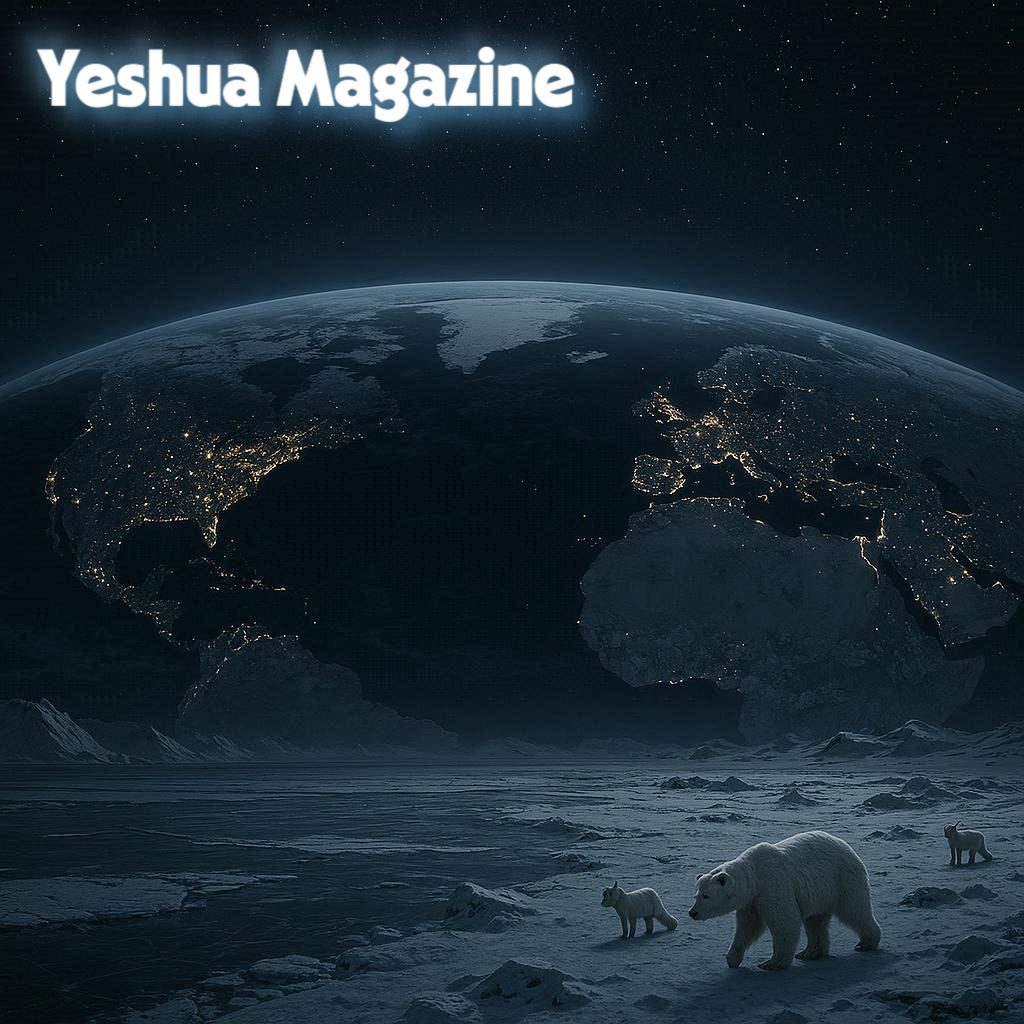


Discover the complete scientific truth about what would happen to Earth if the Sun suddenly disappeared — from instant darkness to total extinction. A deep-dive evergreen explainer.
The Sun is 93 million miles away. It is a giant ball of burning plasma. It gives us light, heat, and life. Most people never think about what would happen without it. But the answer is shocking. It is more dramatic than most people imagine. This article explains exactly what would happen — second by second, day by day, and year by year — if the Sun suddenly disappeared.
The First Few Seconds: A Universe Gone Dark
The Sun disappears. Nothing changes on Earth. Not yet.
You would still feel warm. The sky would still be blue. The oceans would still sparkle. This is because sunlight takes time to travel. It takes exactly 8 minutes and 20 seconds to reach Earth. So life would continue as normal for those final precious minutes. Nobody would know the Sun was gone.
Then it happens. At the 8-minute-20-second mark, daylight stops It does not fade slowly or dim gradually—it cuts off instantly, like someone flipping a light switch. The dayside of Earth plunges into complete darkness. The Moon goes dark too. It only shines because it reflects sunlight. With no sunlight, there is nothing to reflect. The planets vanish from the sky one by one. All that remains is a field of distant stars. Beautiful. Ancient. But terrifyingly cold.
The First 24 Hours: Panic, Cold, and Orbital Chaos
Two disasters begin at the same time. First, Earth loses heat. Second, Earth loses its orbit.
The Sun’s gravity holds Earth in its path around the solar system. Without that gravity, Earth stops curving. It flies off in a straight line. This is the law of inertia. Earth would travel at roughly 30 kilometres per second. It would become a rogue planet. It would drift into deep space with no destination.
At the same time, temperatures begin to fall. Earth’s average surface temperature is about 15 degrees Celsius. The Sun maintains that warmth every single day. Without it, heat begins escaping into space immediately. There is nothing to replace it. Scientists estimate that within one week, the average surface temperature would reach negative 17 degrees Celsius.
The First Week: The Death of Plants and Food Chains
Plants need sunlight to survive. They use it to make food through photosynthesis. Without the Sun, photosynthesis stops immediately. Within days, plants begin to die. Tropical forests go first.Then the temperate woodlands emerged, spreading their leafy canopies across the land. After them came the farmlands, cultivated and tamed by human hands. And finally, every single blade of grass on Earth—from the tiniest shoot to the tallest prairie stem—covered the soil in a living, breathing carpet. It is the fastest and most total agricultural collapse in history.
The food chain falls apart from the bottom up. Herbivores depend on plants. Cows, deer, and rabbits begin to starve. Carnivores that eat them follow shortly after. The collapse is total and irreversible. Humans would face immediate starvation. Greenhouses with artificial lights could keep a small number of people alive. But eight billion people cannot survive on that alone.
One Month Later: A Frozen Planet
One month passes. Earth is now a frozen wasteland.
Surface temperatures drop to between negative 40 and negative 60 degrees Celsius. The oceans slow the cooling down. They store enormous amounts of heat. But even they begin freezing at the surface. Ice sheets spread across the tropics. Rivers and lakes lock up under thick ice. The equator looks like Antarctica.
The atmosphere changes too. The Sun drives all weather on Earth. Without it, wind patterns slow down. Jet streams weaken. Monsoons stop. Trade winds fade. Eventually, snowfall stops as well. Not because it warms up — but because there is not enough energy left to form clouds. The sky becomes clear, still, and silent. A permanent frozen calm covers the entire planet.
One Year On: Who Could Survive?
Some life would survive. Deep on the ocean floor, there are hydrothermal vents. These vents release heat from inside the Earth. Entire ecosystems live around them. Tube worms, shrimp, crabs, and microorganisms thrive there. They do not need sunlight at all. They use a process called chemosynthesis instead. The deep ocean would stay liquid for thousands of years. These creatures would survive long after the surface went dead.
Humans could also survive — but only a few. Underground bunkers powered by nuclear energy could provide heat. Vertical farms with LED lights could grow food. Volcanic regions like Iceland, Yellowstone, and Japan have geothermal energy. Small communities could survive there. But this would support only a tiny number of people. Most of humanity would be gone within months. Cold, starvation, and the collapse of society would take the rest.
Thousands of Years Later: A Frozen Ghost World
Thousands of years pass. Earth is almost unrecognisable.
The oceans are frozen solid. The atmosphere has thinned dramatically. Carbon dioxide and water vapour have frozen and fallen as ice. The air is mostly nitrogen. Oxygen levels are extremely low. Breathing on the surface would be impossible.
Earth drifts silently through the Milky Way. It has no star. No warmth. No destination. It is a rogue planet — dark and frozen. Surface temperatures settle around negative 73 degrees Celsius. That is the final resting temperature of a planet with no star. Only the faint heat from Earth’s core keeps it from being even colder. Deep underground, some microbial life may still cling on. Hidden far below the frozen surface. Surviving in total darkness.
The Broader Solar System Impact
Earth would not be the only victim. The entire solar system would fall apart.
The Sun’s gravity holds every planet in place. Without it, all eight planets break free. Mercury, Venus, Mars, Jupiter, Saturn, Uranus, and Neptune all scatter. Each one flies off in a different direction. The asteroid belt breaks apart too. Billions of rocks and icy bodies fly into space. The Kuiper belt does the same. The solar system — 4.6 billion years in the making — simply dissolves in an instant.
There is another danger too. The Sun creates the heliosphere. This is a giant magnetic bubble. It protects the entire solar system from cosmic radiation. Without the Sun, the heliosphere collapses within days. Cosmic rays flood in from all directions. Every remaining planet gets bombarded. Atmospheres begin to erode. Radiation levels become lethal. Any life that survived the cold would face this new threat.
Conclusion: The Sun Is Not Just a Star — It Is Life Itself
A world without the Sun is a world without life.
The light vanishes in just eight minutes. A week later, the plants are dead. Within a month, the surface freezes solid. After a year, most life has gone extinct. Thousands of years pass, and Earth becomes a frozen ghost, drifting silently through space. The Sun is far more than a light source—it isn’t just a source of warmth either. It is the engine, the beating heart behind everything. Every heartbeat, every breath, every bite of food traces back to that burning ball of fire 93 million miles away. All of it—every single moment of life on Earth—exists because of that star.
The good news? Our Sun is healthy. A middle-aged star burning steadily in the vastness of space, it still has roughly five billion years of fuel left. And for all that time, it is not going anywhere. But thinking about a world without it reminds us of something important. Life on Earth is not guaranteed. It is a gift. And that gift comes entirely from the Sun.
What Would Happen If There Was No Sun? The Complete Scientific Truth About Earth Without Its Star
The Sun is 93 million miles away. It is a giant ball of burning plasma. It gives us light,